RovePlan

RV Kitchen & Camp Galley Essentials Checklist

Reviewed by RovePlan Editorial TeamUpdated 2026-11-197 min guide26 items in default profile (13 essential)

A rattle-free, weight-conscious 26-item RV kitchen and outdoor camp galley packing checklist—built around compact RV cabinet depths, 30-amp wattage budgets, shatterproof dining, and zero-mess transit storage.

Disclosure: As an Amazon Associate, RovePlan earns from qualifying purchases. Read full disclosure.

Filter, Customize & Print Checklist

Trip Profile

All rigs · All Hookup Types · All Seasons · 2-3 nights · 2 travelers

0 / 26 items packed (0%)13 essential remaining

Print blank for a pen-and-paper clipboard list, or check items below first.

0 of 26 checked

Prints cleanly with pen-ready checkboxes (blank or filled).

Add Custom Trip Item (Saved Locally)

13 essential remaining

0/26 packed

Packing & Pre-Trip Field Notes

Managing Weight, Wattage & Rattle Inside a Compact RV Galley

An RV kitchen moves at 65 miles per hour across expansion joints and mountain switchbacks, which changes how you outfit every drawer and cabinet. Swap glass olive oil bottles for plastic squeeze containers, wrap sharp knives in blade guards instead of heavy countertop wood blocks, and use removable-handle nesting cookware separated by felt or silicone protectors. On 30-amp campgrounds (3,600W max; plan on ~2,900W sustained), stagger high-draw countertop appliances like air fryers, electric kettles, and microwaves so you never trip the pedestal breaker while running the roof air conditioner.

Protecting Your Gray Tank & Moving Heat Outdoors

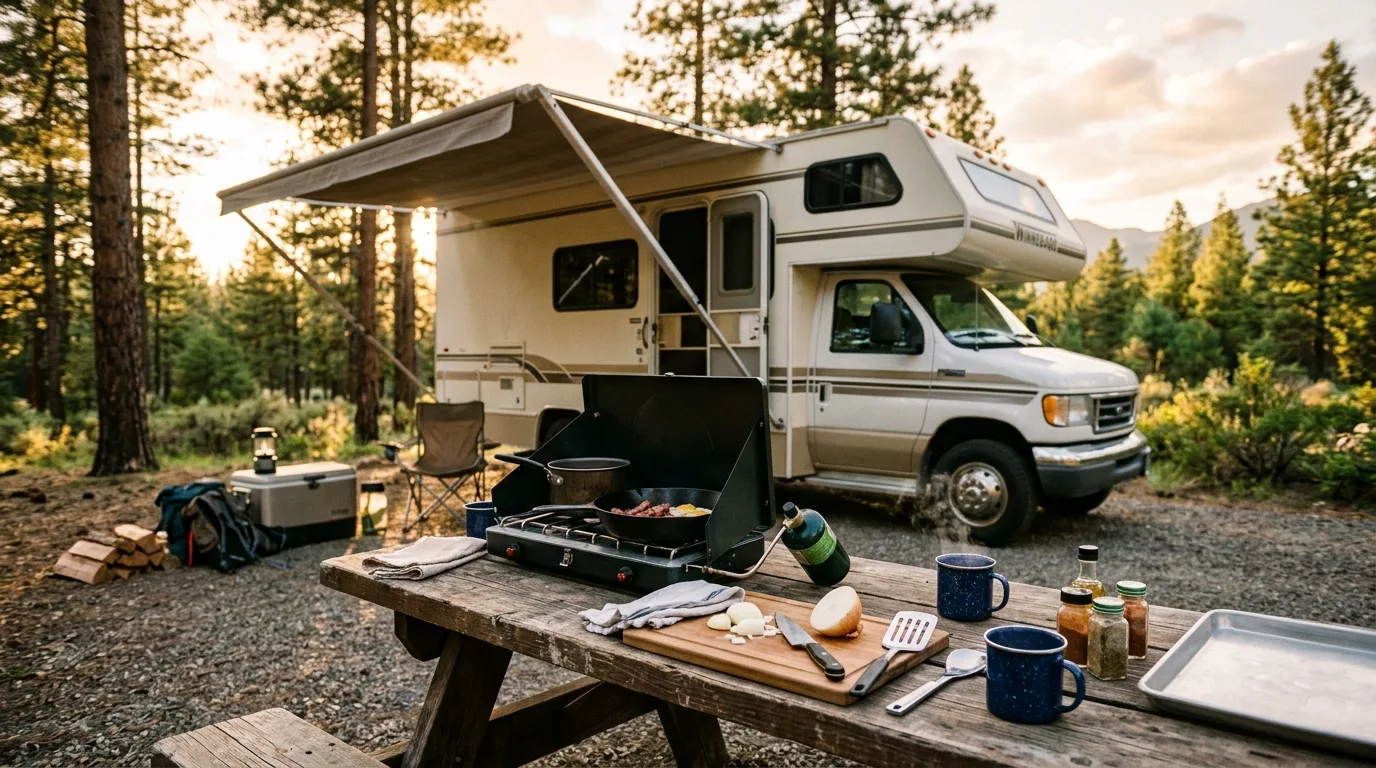
Residential dishwashing habits quickly overwhelm a 30-to-40 gallon RV gray tank. Pre-wiping skillets with a silicone scraper and paper towel keeps congealed grease out of P-traps and tank level probes, while washing in a collapsible tub stretches dry-camping autonomy. Whenever campground weather permits, shifting bacon, burgers, and aromatic meals outside to a tabletop propane griddle prevents smoke alarms from chirping and keeps cabin heat low.

US Safety Standards & Reference Sources

Always verify exact specs in your coach and tow-vehicle owner's manuals.

Field Guide: Key Specs, Pitfalls & Timing

RV Kitchen Quick Reference

Key Numbers & Rules of Thumb

  • 30A watt budget: a 30A TT-30 circuit tops out at 3,600W (plan on ~2,900W sustained)—running a 1,500W electric kettle, 1,200W toaster, and 1,400W roof A/C together will trip the breaker, so stagger high-watt appliances or brew coffee on propane.
  • RV fridge volume: most camper absorption fridges hold only 6–8 cu ft (~40% of a home fridge) and take 6–8 hours to drop below 40°F before loading.
  • Zero-glass policy: swap ceramic plates and glass jars for melamine, stainless steel, silicone, and nesting aluminum/induction-ready cookware.
  • Gray tank preservation: scrape every skillet and plate with paper towels into trash BEFORE washing to keep cooking grease out of narrow RV P-traps.

Common Rookie Mistakes to Avoid

  • Loading room-temperature soda cases and groceries into an absorption fridge right at departure—always pre-chill fridge and groceries 24 hours ahead.
  • Skipping non-slip rubber shelf liners and spring-loaded fridge tension bars—one hard highway curve turns milk jugs into projectiles.
  • Bringing 1,800W air fryers or induction hotplates for off-grid boondocking without checking inverter watt limits.
  • Leaving dry pasta boxes and flour unsealed in cardboard—transfer dry goods into airtight locking plastic canisters to deter ants and mice.

Pre-Trip Timing & Prep

  • 48 hours out: plug in shore power to cool the RV refrigerator empty overnight and freeze block ice/coolers indoors.
  • 24 hours out: batch-prep marinades and chopped veggies in flat freezer bags to save scarce shelf space and cut dishwater volume.
  • Pre-departure latch check: install spring-loaded fridge shelf bars, lock microwave turntable glass in foam/towels, and latch every overhead galley cabinet.

Frequently Asked Questions

What dishes are best for an RV kitchen?
Lightweight, shatterproof melamine, wheat-straw, or enameled steel dishes are ideal. Heavy stoneware chips easily on bumpy roads, adds unnecessary cargo weight, and can break inside overhead cabinets.
How do you keep food from falling out of an RV refrigerator while driving?
Install spring-loaded double tension bars across every refrigerator shelf, pack heavy jars low, and engage the exterior refrigerator door travel latch before hitting the road.
Can I connect any portable grill directly to my RV's exterior propane quick-connect?
Only if the grill is designed for low-pressure (11-inch water column) propane or you remove the grill's built-in high-pressure regulator. Double-check your RV and grill manuals—running two regulators in series starves the flame.
How can I prevent gray-tank odors and clogged RV sink drains?
Always wipe cooking oil, butter, and food residue off pans with a paper towel into the trash before washing, use fine mesh sink drain strainers, and use minimal water inside a collapsible wash basin.
View all 15 checklists →