RovePlan

New Travel Trailer First-Trip Gear & Setup Checklist

Reviewed by RovePlan Editorial TeamUpdated 2026-11-198 min guide30 items in default profile (18 essential)

A practical, 30-item gear outfitting and packing checklist engineered for new US travel trailer owners—covering weight distribution hitches, 30A/50A pedestals, leveling, potable water, and cabin staples.

Disclosure: As an Amazon Associate, RovePlan earns from qualifying purchases. Read full disclosure.

Filter, Customize & Print Checklist

Trip Profile

All rigs · All Hookup Types · All Seasons · 2-3 nights · 2 travelers

0 / 30 items packed (0%)18 essential remaining

Print blank for a pen-and-paper clipboard list, or check items below first.

0 of 30 checked

Prints cleanly with pen-ready checkboxes (blank or filled).

Add Custom Trip Item (Saved Locally)

18 essential remaining

0/30 packed

Packing & Pre-Trip Field Notes

Buying Guide: Prioritize Pedestal & Plumbing Protection Before Comfort Upgrades

First-time travel trailer buyers often overspend on decorative camp accessories while skipping the four core protection items that prevent expensive roadside failures: an Electrical Management System (EMS) surge protector, a brass water pressure regulator with gauge, heavy-duty rubber wheel chocks, and a bayonet-locking sewer hose kit with a clear elbow. An EMS unit shuts off power automatically if a park pedestal is miswired or drops below safe voltage, while a pressure regulator protects plastic PEX plumbing from 80+ PSI municipal water lines. Verify your exact amperage (30A vs. 50A) and hitch tongue weight rating in your trailer's owner's manual before purchasing hardware.

Buying Guide: What You Can Safely Skip or Borrow From Home on Trip One

Resist the urge to outfit an entire duplicate kitchen or buy specialty RV cookware before your shakedown weekend. Standard lightweight pans, reusable food containers, and bedding from home work fine for a 2–3 night inaugural trip, provided fragile dishes are packed securely in padded bins. Keep your initial gear budget focused on safety, hookup reliability, and a #2 Robertson square-drive screwdriver bit—almost every interior cabinet hinge and trim panel in North American travel trailers uses square-drive fasteners that loosen during the first few hundred miles.

Visual Setup & Hookup Sequence Reference

Technical illustrations of standard US campground hookup order and leveling safety geometry (always confirm ratings in your RV owner's manual).

A. Safe Shore Power & Fresh Water Hookup Sequence

Protect coach electronics & PEX plumbing

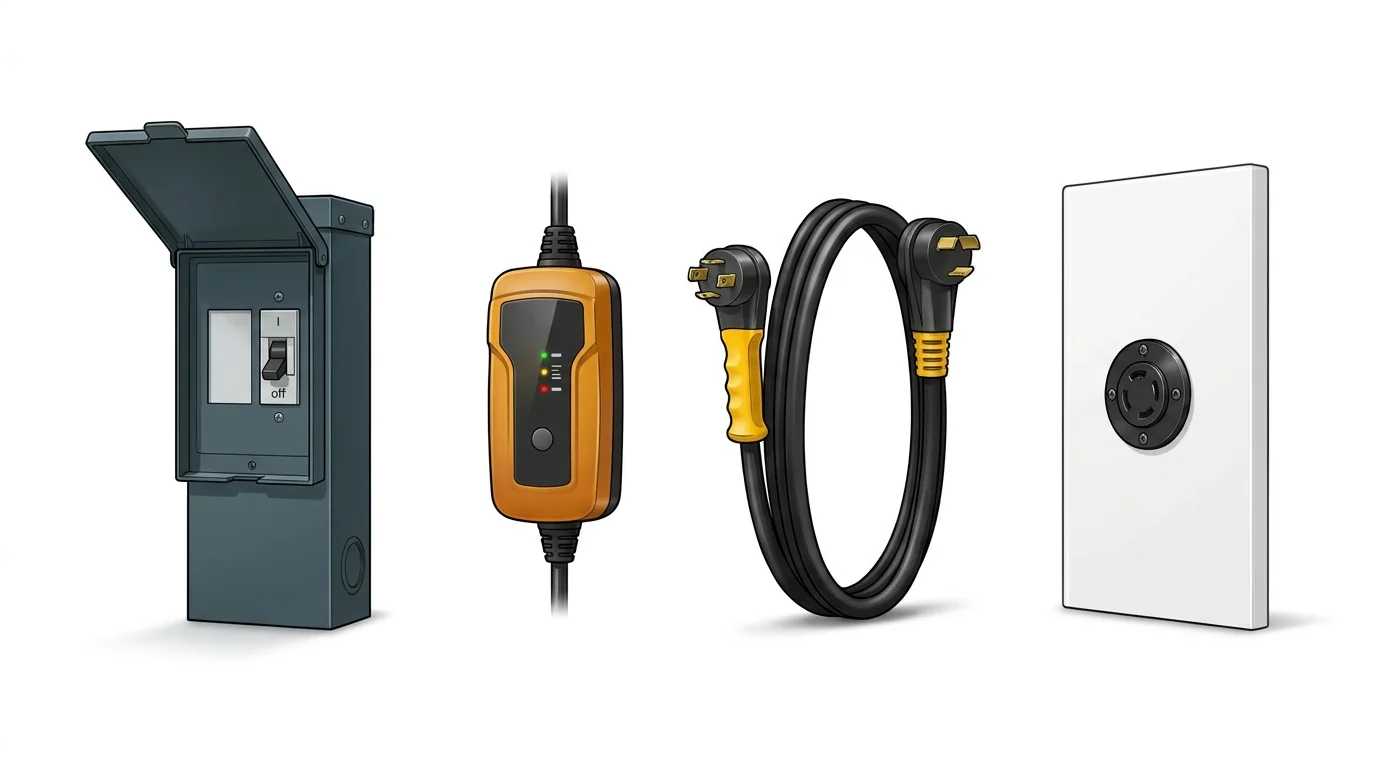
ELECTRICAL (30A TT-30P / 50A 14-50P) — TURN BREAKER OFF BEFORE PLUGGING

Illustration: Four-step US RV shore power hookup sequence from left to right: campground power pedestal with breaker off, inline EMS surge protector, heavy-duty 30A/50A shore cord, and RV twist-lock shore power inlet
  1. 1. Pedestal

    Breaker OFF first

  2. 2. EMS Surge Guard

    Verify polarity & voltage

  3. 3. RV Shore Cord

    Lock twist-ring inlet

  4. 4. Breaker

    Switch ON

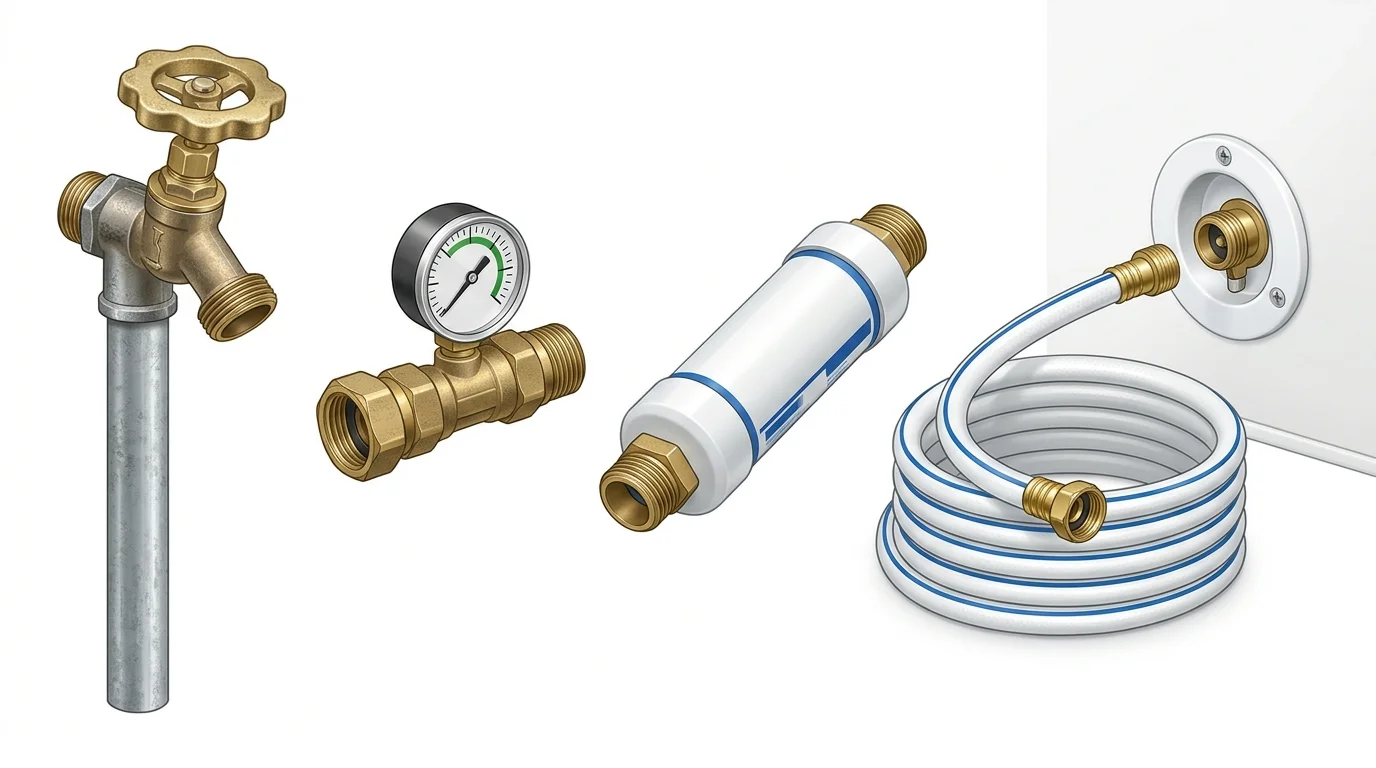
POTABLE WATER (NSF/ANSI 61) — FLUSH SPIGOT BEFORE ATTACHING HOSE

Illustration: Four-step US RV fresh water hookup sequence from left to right: campground water spigot, brass 40 to 50 PSI pressure regulator with gauge, inline potable filter cartridge, and drinking water hose to RV city water inlet
  1. 1. Camp Spigot

    Flush 10 seconds

  2. 2. Pressure Regulator

    Clamp to 40–50 PSI

  3. 3. Inline Filter

    Follow arrow direction

  4. 4. Potable Hose

    To RV City Inlet

B. Campsite Leveling Blocks & Wheel Chocking Geometry

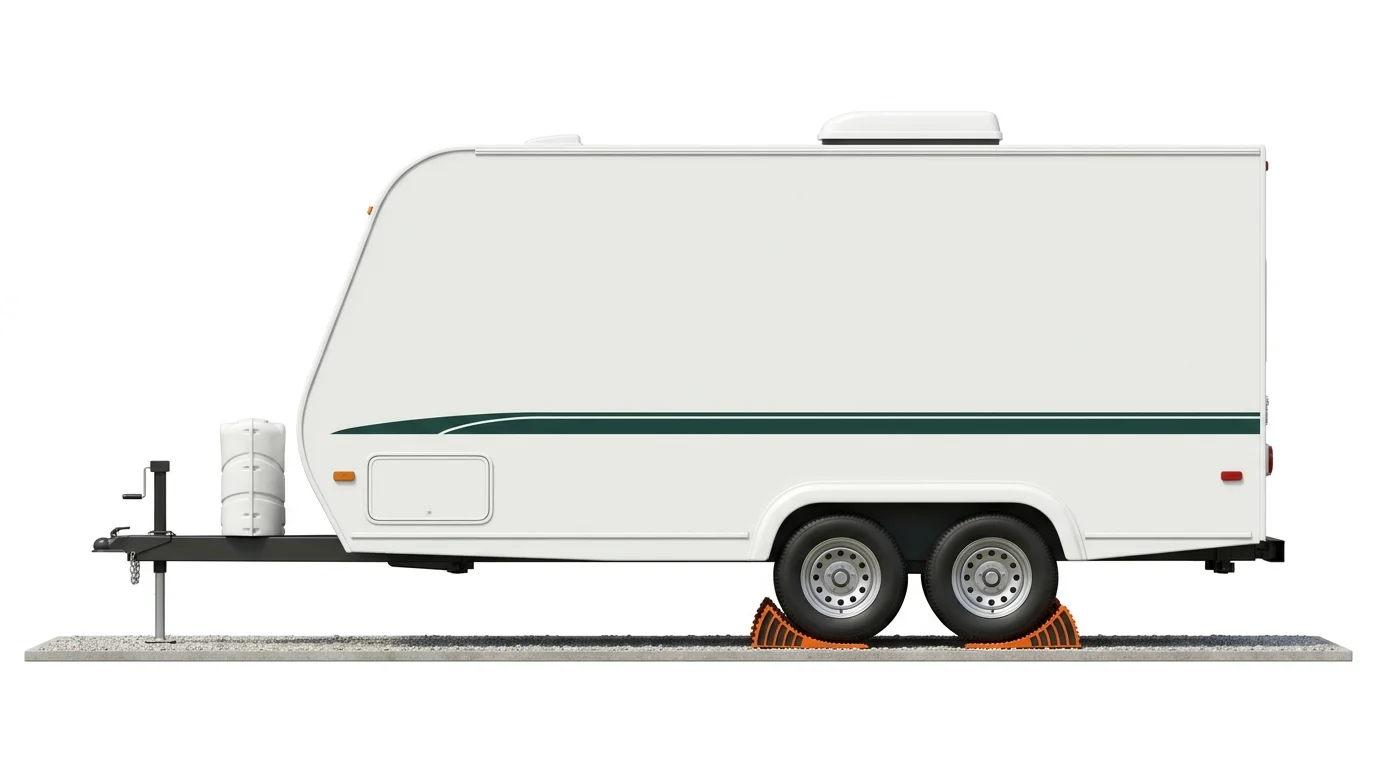
Chock wheels BEFORE unhitching

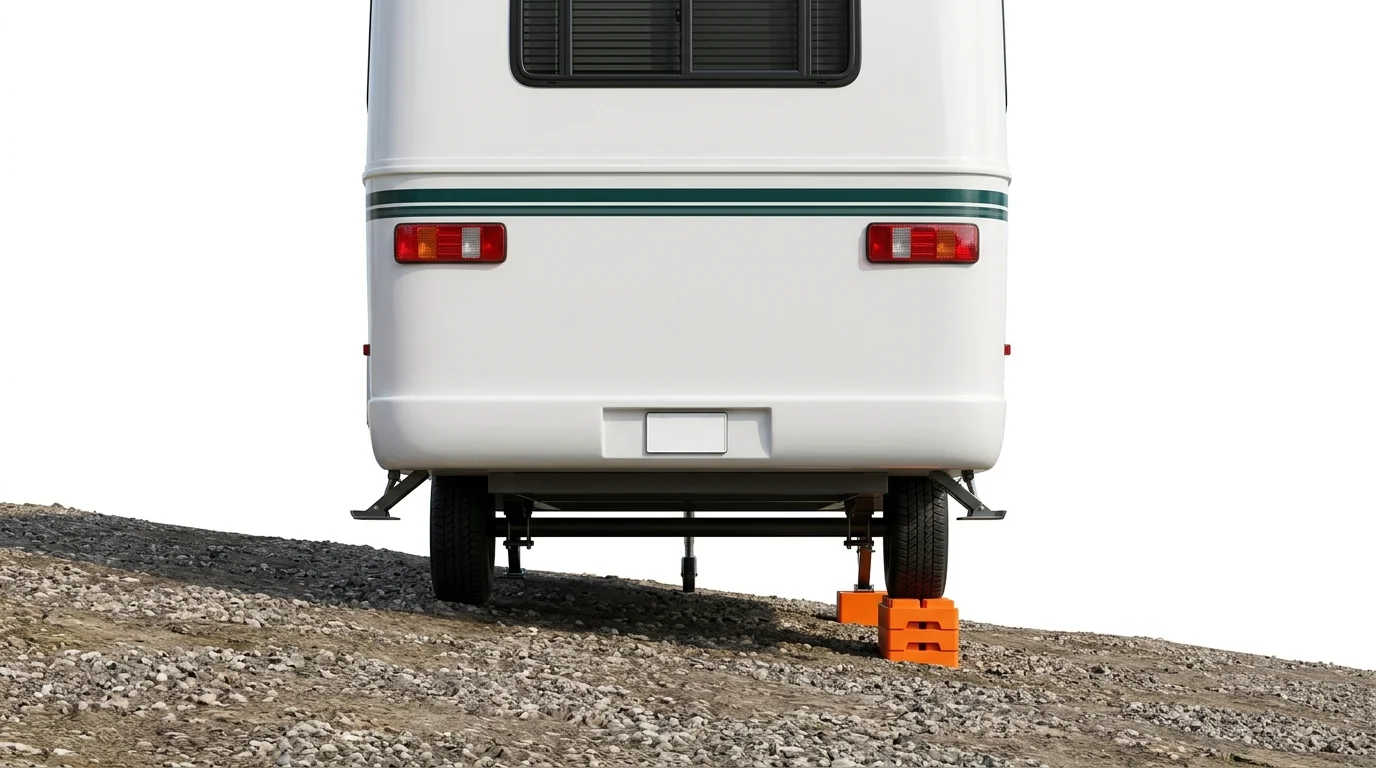
STEP 1: LEVEL SIDE-TO-SIDE FIRST

Axle Bubble Level
0° Level
Illustration: Rear view of travel trailer resting level on sloped campsite ground with interlocking orange polymer leveling blocks stacked neatly under the low-side tire

Blocks under low-side tire

STEP 2: CHOCK TIRES BEFORE UNHITCHING

Jack AFTERUnhitch & level front-to-back second
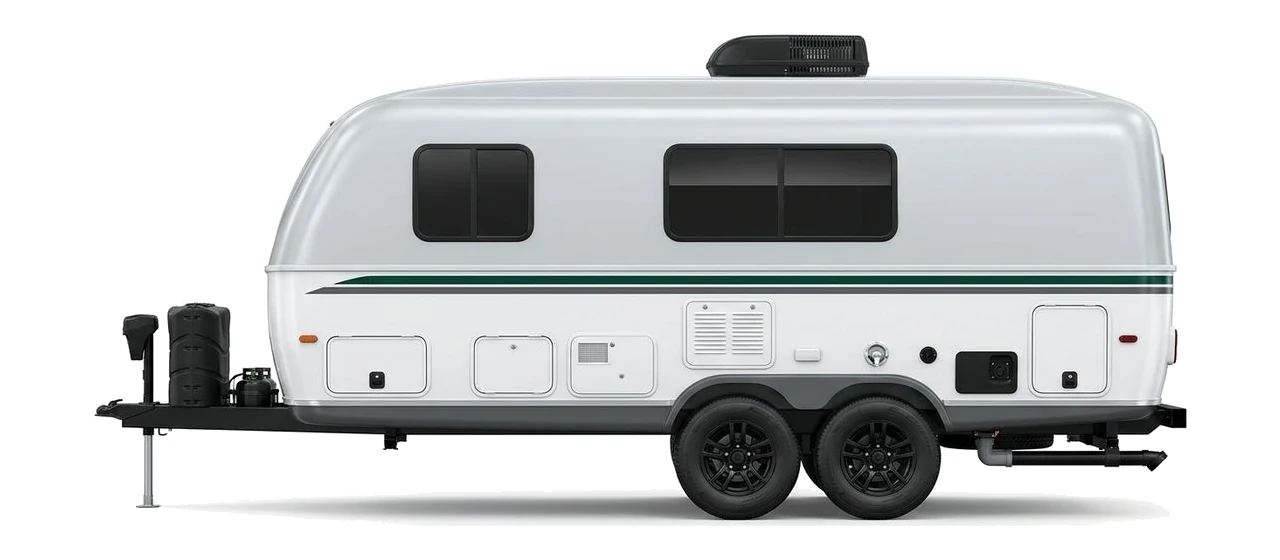
Illustration: Side view of tandem-axle travel trailer with heavy-duty orange wheel chocks wedged tightly in front of and behind the tires before raising the front tongue jack

Chocks wedged tight front & rear

Why We Specify These Hardware Ratings

  • EMS vs. Basic Surge Strips: Full Electrical Management System (EMS) units cut power during open neutrals, reverse polarity, or sustained low-voltage brownouts—basic surge strips only absorb brief spikes.
  • 40–50 PSI Lead-Free Brass Regulators: Unregulated US park spigots can exceed 80–100 PSI; capping pressure protects interior PEX crimps and water heater check valves.
  • NSF/ANSI 61 Potable Hoses: Residential green garden hoses are not certified food-grade and can leach plasticizers into coach lines.
  • 15A Household Adapters: Limited strictly to ~1,500W for battery charging and lights—never power roof A/C compressors or electric water heaters through a 15A outlet.

US Safety Standards & Reference Sources

Always verify exact specs in your coach and tow-vehicle owner's manuals.

Field Guide: Key Specs, Pitfalls & Timing

Travel Trailer Quick Reference

Key Numbers & Rules of Thumb

  • Day-one essentials vs. upgrades: buy your weight-distribution hitch, 30A EMS surge protector, 40–50 PSI brass water regulator, white NSF hose, sewer hose kit, and chocks BEFORE dealership pickup.
  • Tongue weight target: keep 10–15% of loaded trailer weight on the hitch ball to prevent terrifying highway sway.
  • Torque lug nuts at 50 miles: brand-new trailer aluminum wheels settle after initial heat cycles—re-torque lug nuts at 25, 50, and 100 miles.
  • First campsite close to home: book your maiden voyage within 60–90 miles of home for 2 nights so any overlooked adapter or dealer punch-list item is easy to fix.

Common Rookie Mistakes to Avoid

  • Buying everything at the dealership parts counter at markup—skip unnecessary gimmicks and focus on rated safety, power, water, and leveling gear.
  • Assuming the dealership set brake controller gain and weight-distribution spring bars for your actual loaded truck.
  • Using a green residential garden hose instead of a food-grade NSF/ANSI 61 white/blue potable hose.
  • Forgetting a 30A-to-15A dogbone adapter for plugging in at your home driveway before leaving (light loads only, ~1,500W max—never A/C).

Pre-Trip Timing & Prep

  • 7 days before dealer PDI: assemble your day-one utility tote (EMS guard, 40–50 PSI regulator, white hose, sewer kit, rubber chocks, leveling blocks, torque wrench).
  • Dealership PDI day (plan 3+ hours): test A/C, furnace, fridge, water pump, slide-outs, awning, all lights, and verify where low-point drains and fuses sit.
  • Shakedown weekend: run a complete camp arrival, 2-night stay, and tank dump checklist to build repeatable muscle memory.

Frequently Asked Questions

What gear do I actually need before picking up a new travel trailer for the first time?
Most US dealerships do not include hookup gear with a new travel trailer. Before leaving the lot or driveway, make sure you have a 30A or 50A EMS surge protector, wheel chocks, leveling blocks, a potable drinking water hose, a brass water pressure regulator, a 20 ft sewer hose kit, and disposable nitrile gloves.
Should I buy a 30-amp or 50-amp surge protector for my travel trailer?
Match the surge protector directly to your trailer's shore power inlet—most single-A/C travel trailers under 30 feet use a 30A TT-30P plug, while dual-A/C trailers typically use a 50A NEMA 14-50P cord. Check your RV electrical panel or owner's manual first, then carry dogbone adapters for other pedestal types.
Why are regular household sheets often loose or too long on travel trailer beds?
Many US travel trailers come with an RV Short Queen mattress measuring 60 by 75 inches instead of a residential 60 by 80 inch Queen. Standard sheets still work if tucked tightly or held with sheet straps, or you can pack fitted sheets sized specifically for RV Short Queen mattresses.
How full can I travel with my fresh, gray, and black water tanks on a first trip?
Unless you are heading to a dry boondocking site with no water available, haul with empty gray and black tanks and only 5 to 10 gallons in the fresh tank for roadside restroom stops. Water weighs 8.34 lbs per gallon, so full tanks add hundreds of pounds to your trailer weight and affect tongue balance.
What is the safest step-by-step order for hooking up at a full-hookup US campsite?
First, level the trailer side-to-side with leveling blocks and chock the wheels tightly before unhitching. Next, test the pedestal with the breaker OFF, turn it on to verify green EMS diagnostics, and plug in your shore cord. Finally, flush the spigot briefly, attach your pressure regulator, connect the potable water hose, and wait to hook up the sewer hose until needed or keep valves closed until two-thirds full.
View all 15 checklists →