RovePlan

Family & Pet National Park RV Trip Checklist

Reviewed by RovePlan Editorial TeamUpdated 2026-11-198 min guide26 items in default profile (15 essential)

A 26-item preparedness checklist for families and pet owners visiting US National Parks and State Parks—covering wildlife food storage, generator quiet hours, kids gear, and park hookup basics.

Disclosure: As an Amazon Associate, RovePlan earns from qualifying purchases. Read full disclosure.

Filter, Customize & Print Checklist

Trip Profile

All rigs · All Hookup Types · 3-Season · 4-7 nights · 4 travelers

0 / 26 items packed (0%)15 essential remaining

Print blank for a pen-and-paper clipboard list, or check items below first.

0 of 26 checked

Prints cleanly with pen-ready checkboxes (blank or filled).

Add Custom Trip Item (Saved Locally)

15 essential remaining

0/26 packed

Packing & Pre-Trip Field Notes

Planning Around National Park RV Length & Hookup Realities

Unlike private commercial RV resorts, most historic National Park campgrounds (Yosemite, Yellowstone, Glacier, Zion) have tight turns, no sewer hookups, and strict 20-to-35-foot combined length limits. Always measure bumper-to-hitch-to-bumper length—including your tow vehicle—before booking on Recreation.gov.
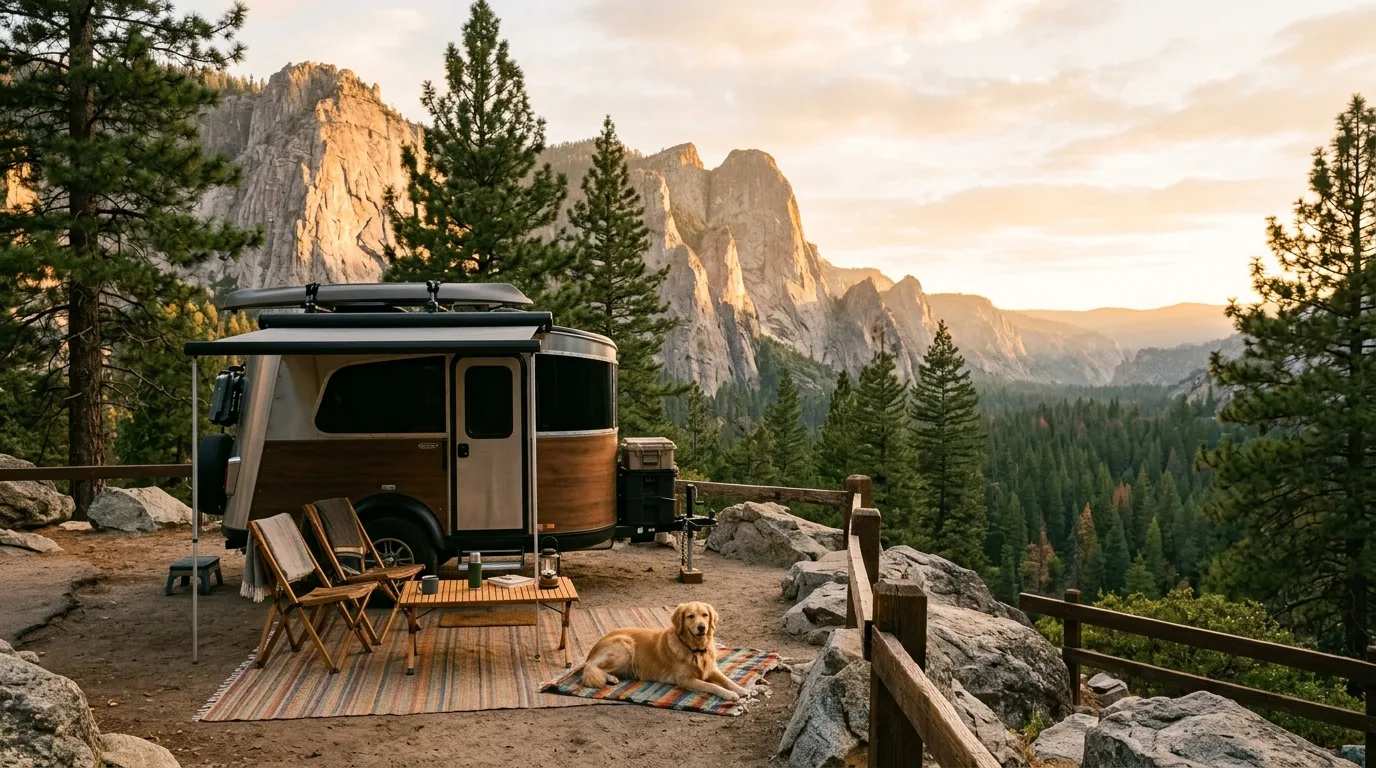
Clean-Camp Bear Compliance & Family Pet Safety at NPS Sites

National Park rangers patrol campgrounds closely for unsecured coolers, dog bowls left on picnic tables, and pets exceeding the 6-foot maximum leash rule under 36 CFR § 2.15 (a fixed 6-foot leash is the safest option). Use latching storage totes for every scented item, pack a cellular temperature monitor if your park permits quiet pets inside an air-conditioned coach, and keep paper permits plus offline trail maps downloaded before crossing park gates.

Visual Setup & Hookup Sequence Reference

Technical illustrations of standard US campground hookup order and leveling safety geometry (always confirm ratings in your RV owner's manual).

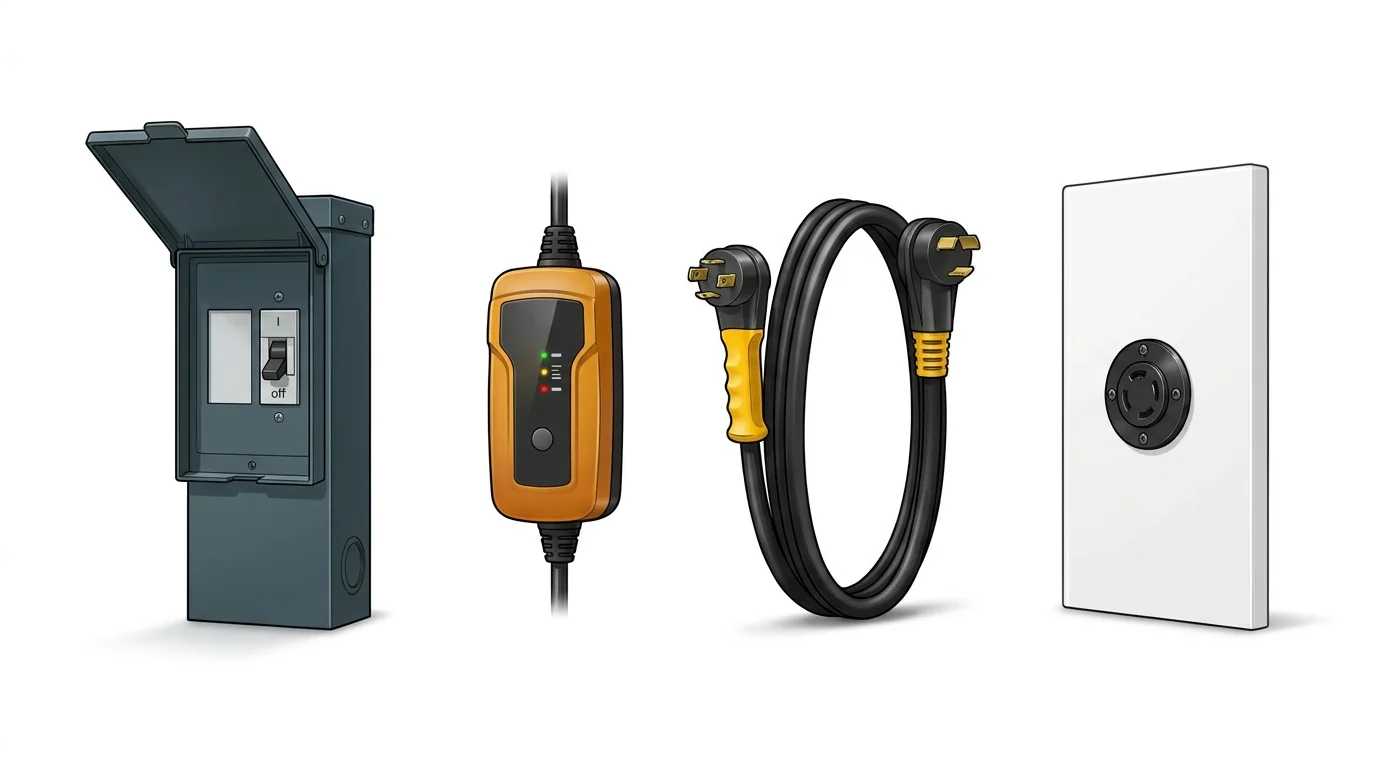
A. Safe Shore Power & Fresh Water Hookup Sequence

Protect coach electronics & PEX plumbing

ELECTRICAL (30A TT-30P / 50A 14-50P) — TURN BREAKER OFF BEFORE PLUGGING

Illustration: Four-step US RV shore power hookup sequence from left to right: campground power pedestal with breaker off, inline EMS surge protector, heavy-duty 30A/50A shore cord, and RV twist-lock shore power inlet
  1. 1. Pedestal

    Breaker OFF first

  2. 2. EMS Surge Guard

    Verify polarity & voltage

  3. 3. RV Shore Cord

    Lock twist-ring inlet

  4. 4. Breaker

    Switch ON

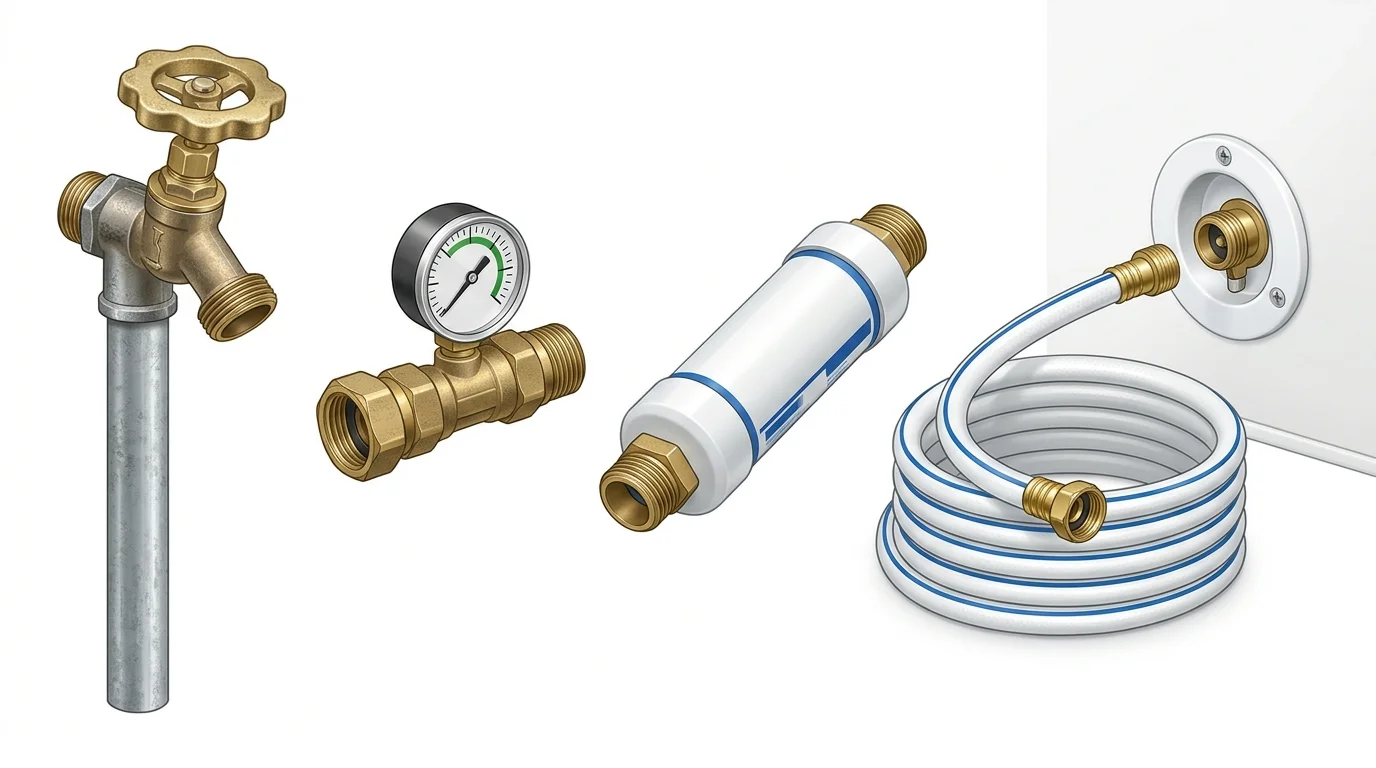
POTABLE WATER (NSF/ANSI 61) — FLUSH SPIGOT BEFORE ATTACHING HOSE

Illustration: Four-step US RV fresh water hookup sequence from left to right: campground water spigot, brass 40 to 50 PSI pressure regulator with gauge, inline potable filter cartridge, and drinking water hose to RV city water inlet
  1. 1. Camp Spigot

    Flush 10 seconds

  2. 2. Pressure Regulator

    Clamp to 40–50 PSI

  3. 3. Inline Filter

    Follow arrow direction

  4. 4. Potable Hose

    To RV City Inlet

B. Campsite Leveling Blocks & Wheel Chocking Geometry

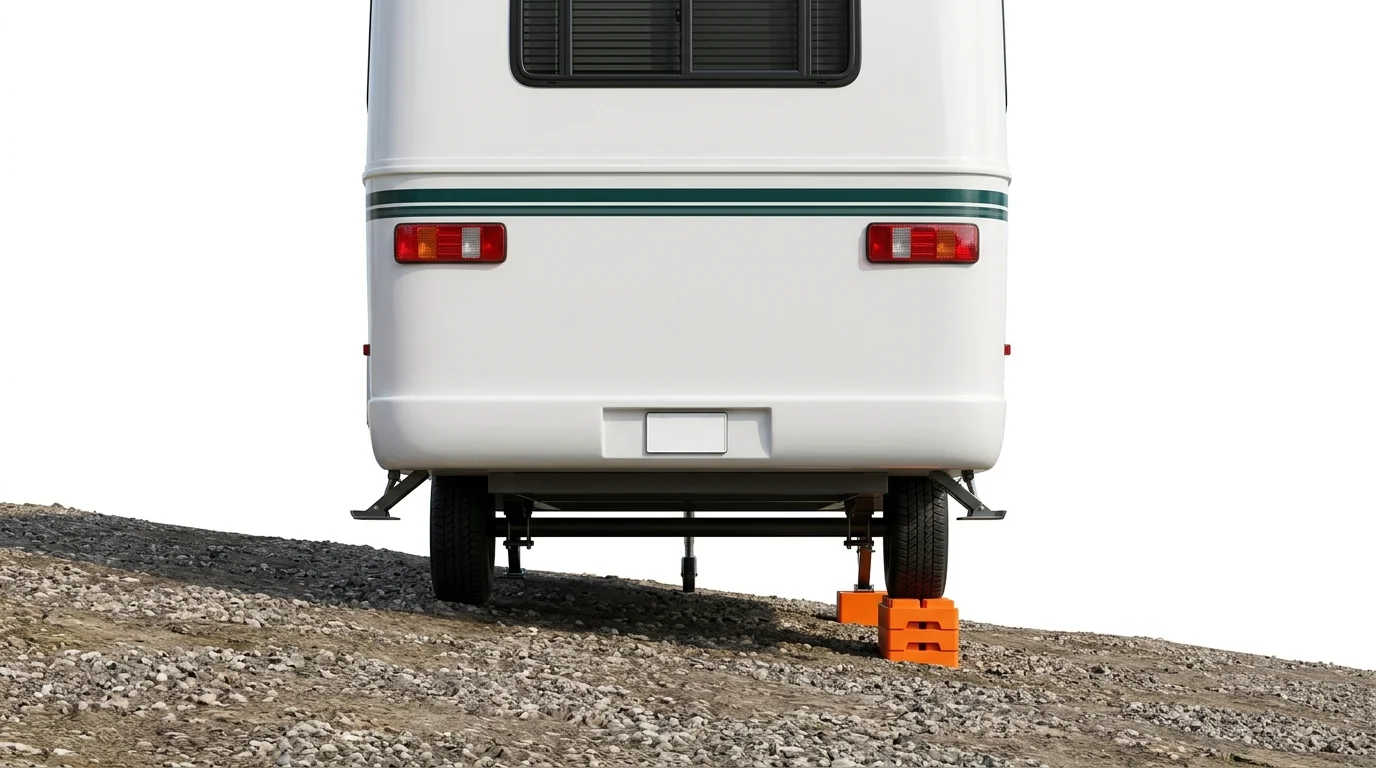
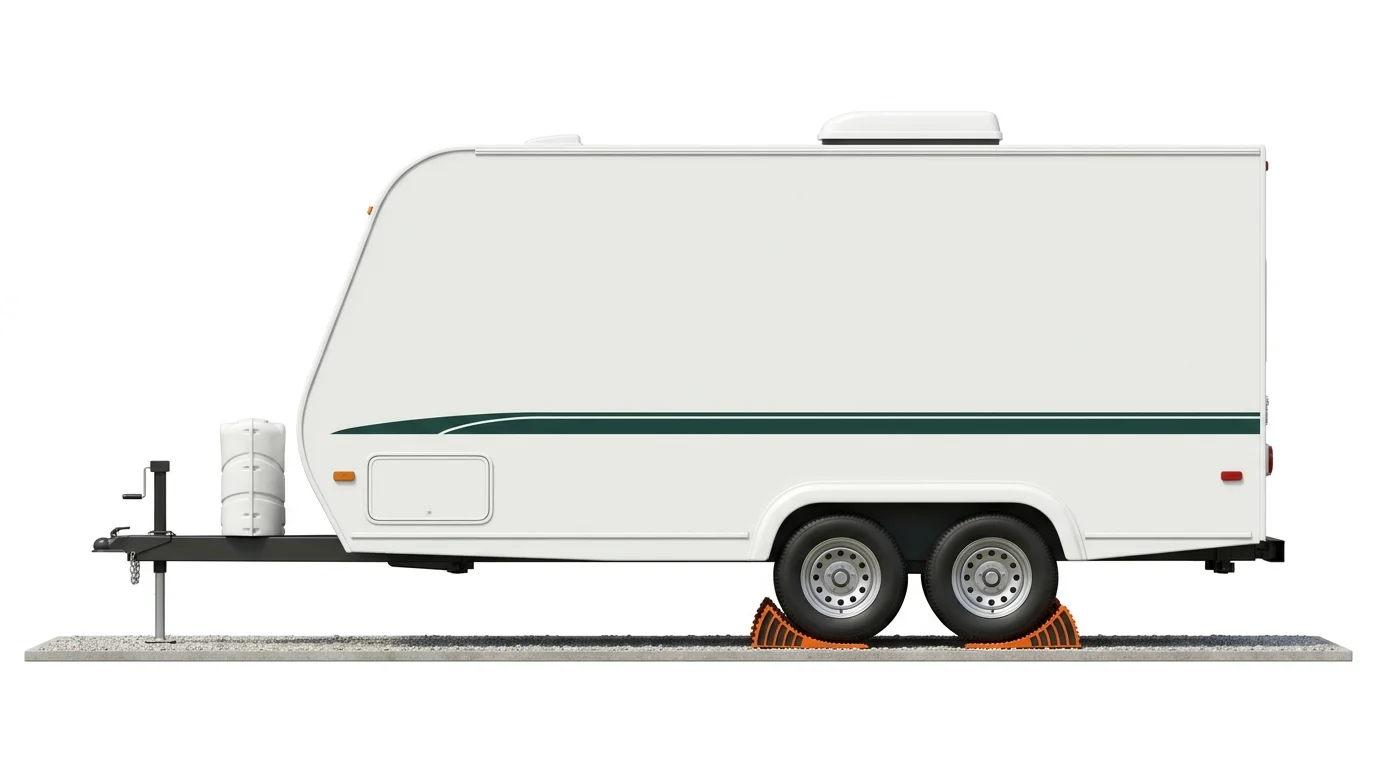
Chock wheels BEFORE unhitching

STEP 1: LEVEL SIDE-TO-SIDE FIRST

Axle Bubble Level
0° Level
Illustration: Rear view of travel trailer resting level on sloped campsite ground with interlocking orange polymer leveling blocks stacked neatly under the low-side tire

Blocks under low-side tire

STEP 2: CHOCK TIRES BEFORE UNHITCHING

Jack AFTERUnhitch & level front-to-back second
Illustration: Side view of tandem-axle travel trailer with heavy-duty orange wheel chocks wedged tightly in front of and behind the tires before raising the front tongue jack

Chocks wedged tight front & rear

Why We Specify These Hardware Ratings

  • EMS vs. Basic Surge Strips: Full Electrical Management System (EMS) units cut power during open neutrals, reverse polarity, or sustained low-voltage brownouts—basic surge strips only absorb brief spikes.
  • 40–50 PSI Lead-Free Brass Regulators: Unregulated US park spigots can exceed 80–100 PSI; capping pressure protects interior PEX crimps and water heater check valves.
  • NSF/ANSI 61 Potable Hoses: Residential green garden hoses are not certified food-grade and can leach plasticizers into coach lines.
  • 15A Household Adapters: Limited strictly to ~1,500W for battery charging and lights—never power roof A/C compressors or electric water heaters through a 15A outlet.

US Safety Standards & Reference Sources

Always verify exact specs in your coach and tow-vehicle owner's manuals.

Field Guide: Key Specs, Pitfalls & Timing

National Parks Quick Reference

Key Numbers & Rules of Thumb

  • Length limits: historic NPS campgrounds (Yosemite, Glacier, Yellowstone) cap total rig length at 21–30 ft combined truck + trailer—measure bumper-to-hitch accurately.
  • Quiet hours & generator windows: National Parks enforce strict quiet hours (typically 10 PM–6 AM) and allow generators only during posted daytime windows.
  • Dry-camp default: over 80% of NPS campgrounds have zero electric/water/sewer hookups—bring 3+ days of solar/battery power and potable water capacity.
  • Bear country food rule: store all coolers, dog food, toothpaste, and scented trash inside latched metal bear boxes or hard-sided RV walls (never pop-up canvas).

Common Rookie Mistakes to Avoid

  • Booking a "30 ft combined" Recreation.gov site for a 26 ft travel trailer pulled by a 20 ft crew-cab pickup (46 ft total!).
  • Forgetting timed-entry vehicle reservations or America the Beautiful Interagency passes before entering peak parks.
  • Leaving kids’ bike helmets, snacks, or scented lip balm in exterior unsealed storage bags in grizzly/black bear habitats.
  • Expecting cell signal or dump stations to stay open during early/late shoulder-season park visits.

Pre-Trip Timing & Prep

  • 30 days out: confirm Recreation.gov site pad dimensions, slide-out tree clearance, and timed-entry permits; download offline NPS park maps.
  • 48 hours out: pack layered rain shells, trail headlamps, bear spray (holstered for hikes), and portable camp lanterns for dark timber loops.
  • Gate arrival: have photo ID + America the Beautiful pass on the dash, fill fresh tank at the entrance fill station if available, and stow all scents before dusk.

Frequently Asked Questions

Can I leave my dog inside my RV while hiking in a US National Park?
Check the specific National Park's superintendent's compendium before assuming you can leave a pet unattended in camp: 36 CFR § 2.15 prohibits leaving pets unattended and tied to an object outside, and many parks restrict leaving animals in vehicles or RVs whenever temperatures or noise become a hazard. According to AVMA data on closed passenger vehicles, interior temperatures can climb roughly 20°F in 10 minutes, nearly 30°F in 20 minutes, and over 40°F within an hour even in the shade—and an unpowered RV or one whose campground shore-power breaker trips heats up similarly. On warm days or when hiking pet-restricted backcountry trails, arrange local kennel or dog-daycare boarding outside the park entrance rather than relying solely on campground electricity.
Why should I buy firewood near the National Park instead of bringing it from home?
Transporting out-of-state firewood spreads invasive forest pests like the emerald ash borer. Most US National and State Parks strictly require purchasing certified heat-treated or locally harvested firewood within 10 to 50 miles of your campground.
Do US National Park campgrounds have 50-amp full hookups?
Most historic National Park campgrounds (such as Yosemite, Yellowstone Fishing Bridge alternatives, Glacier, and Zion Watchman) offer dry camping or 20A/30A electric only, with shared water fill and dump stations near the loop exit. Always check Recreation.gov utility details before arrival.
What counts as scented items that must go in a bear locker or inside a hard-sided RV?
In bear-active parks, anything with a scent—food, coolers, empty trash bags, sunscreen, toothpaste, bug spray, and dog water bowls—must be stored inside a hard-sided RV with windows closed or inside the metal campsite bear box whenever unattended or sleeping.
View all 15 checklists →