RovePlan

Off-Grid RV Boondocking & Dry Camping Checklist

Reviewed by RovePlan Editorial TeamUpdated 2026-11-198 min guide26 items in default profile (19 essential)

A complete 26-item preparedness checklist for dispersed camping on US BLM lands, National Forests, and Harvest Hosts stays without water, sewer, or shore power pedestals.

Disclosure: As an Amazon Associate, RovePlan earns from qualifying purchases. Read full disclosure.

Filter, Customize & Print Checklist

Trip Profile

All rigs · Boondocking (Off-Grid) · All Seasons · 2-3 nights · 2 travelers

0 / 26 items packed (0%)19 essential remaining

Print blank for a pen-and-paper clipboard list, or check items below first.

0 of 26 checked

Prints cleanly with pen-ready checkboxes (blank or filled).

Add Custom Trip Item (Saved Locally)

19 essential remaining

0/26 packed

Packing & Pre-Trip Field Notes

The Golden Rule of Dry Camping: Gray Tank Capacity Limits You First

Most new boondockers worry about running out of fresh water, yet their gray holding tank almost always fills up before the fresh tank empties—especially when cooking pasta, washing dishes, and taking continuous showers. Switching to pre-prepped meals, wiping greasy pans with a paper towel before rinsing, and using a two-spray-bottle wash/rinse method can double your off-grid stay length.
Sizing Portable Solar, Batteries & Propelling Your Campsite Off-Grid

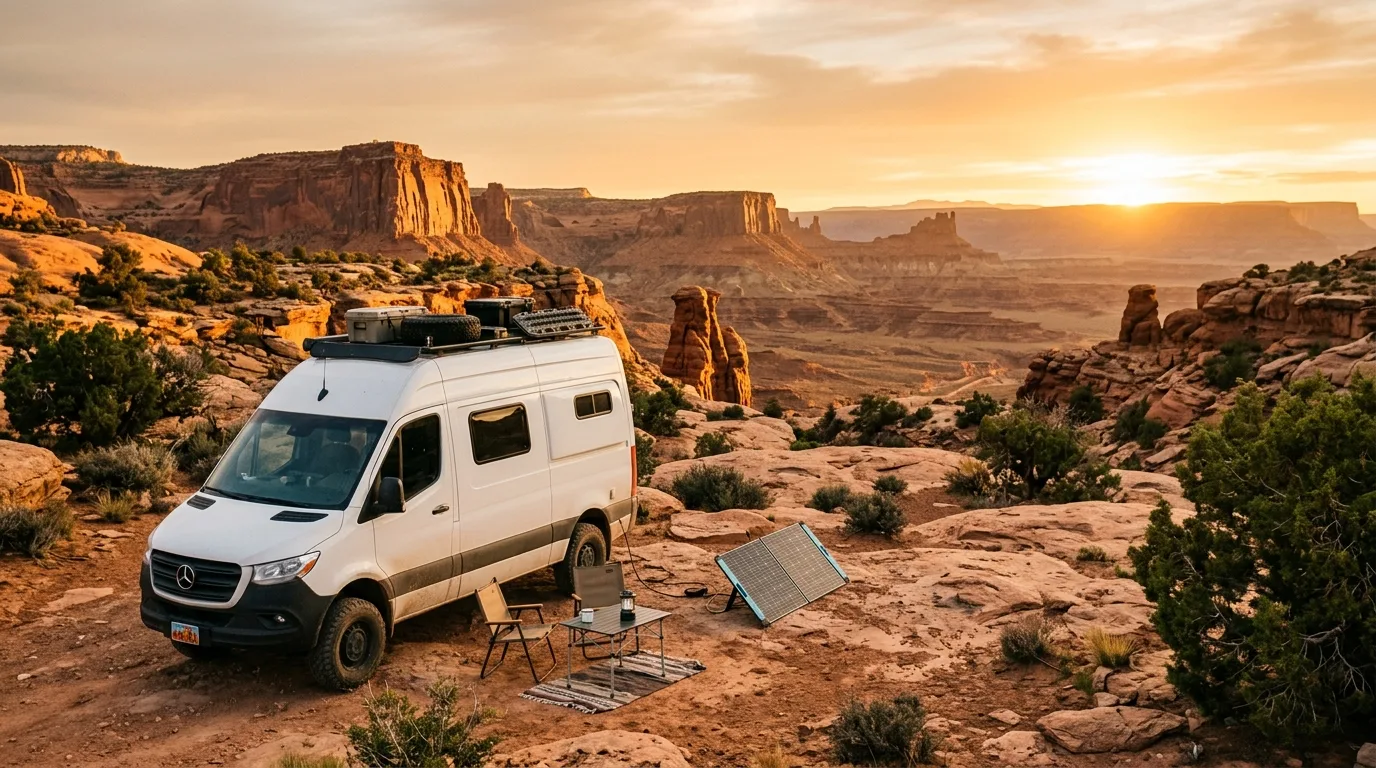
Park your rig comfortably under pine shade and place a 200W folding solar suitcase out in full sun on a 30-foot 10AWG SAE cable to minimize voltage loss. Pair your panels with a Bluetooth battery monitor shunt so you track true amp-hour consumption across furnace blowers, 12V compressors, and inverters—leaving ample reserve before quiet evening hours.

Visual Campsite Leveling & Chocking Reference

Technical illustrations of campsite side-to-side leveling and wheel chocking safety geometry (always confirm ratings in your RV owner's manual).

Campsite Leveling Blocks & Wheel Chocking Geometry

Chock wheels BEFORE unhitching

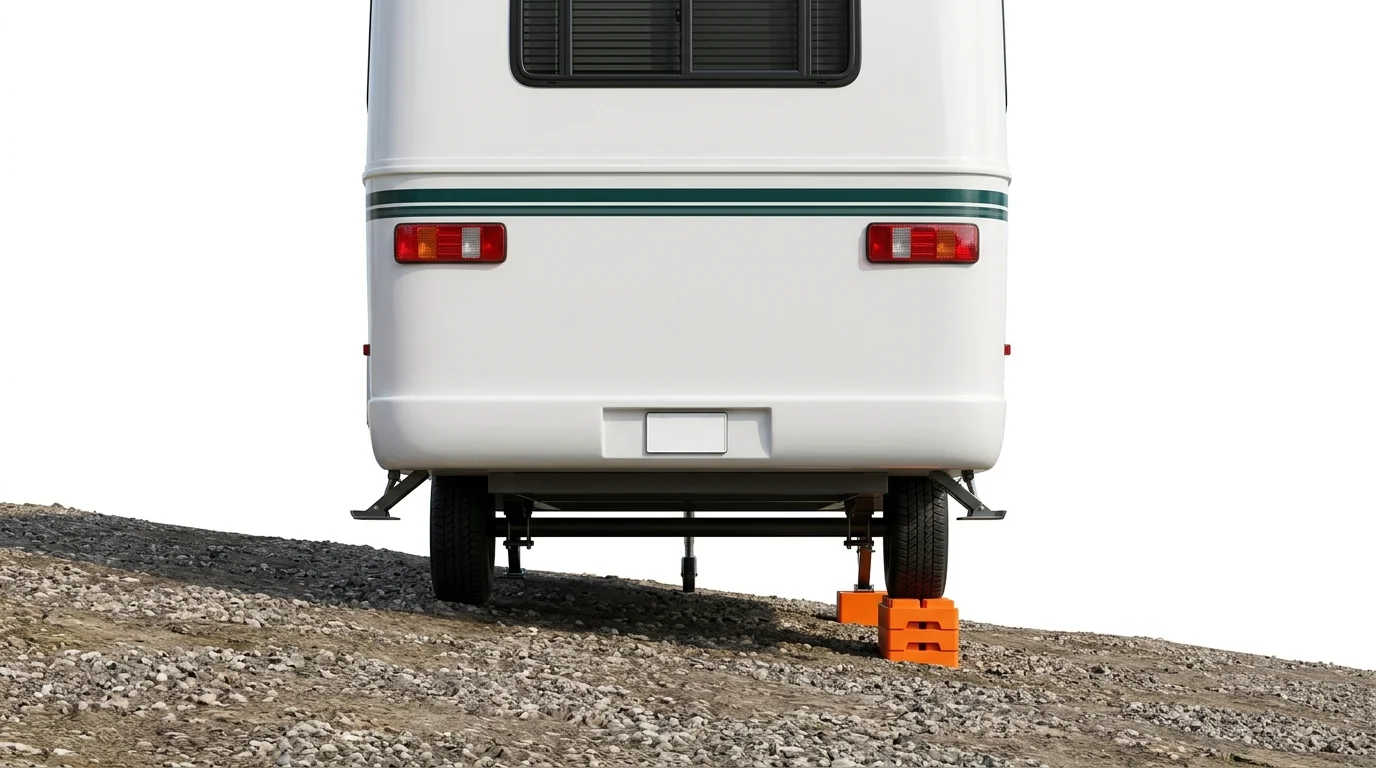
STEP 1: LEVEL SIDE-TO-SIDE FIRST

Axle Bubble Level
0° Level
Illustration: Rear view of travel trailer resting level on sloped campsite ground with interlocking orange polymer leveling blocks stacked neatly under the low-side tire

Blocks under low-side tire

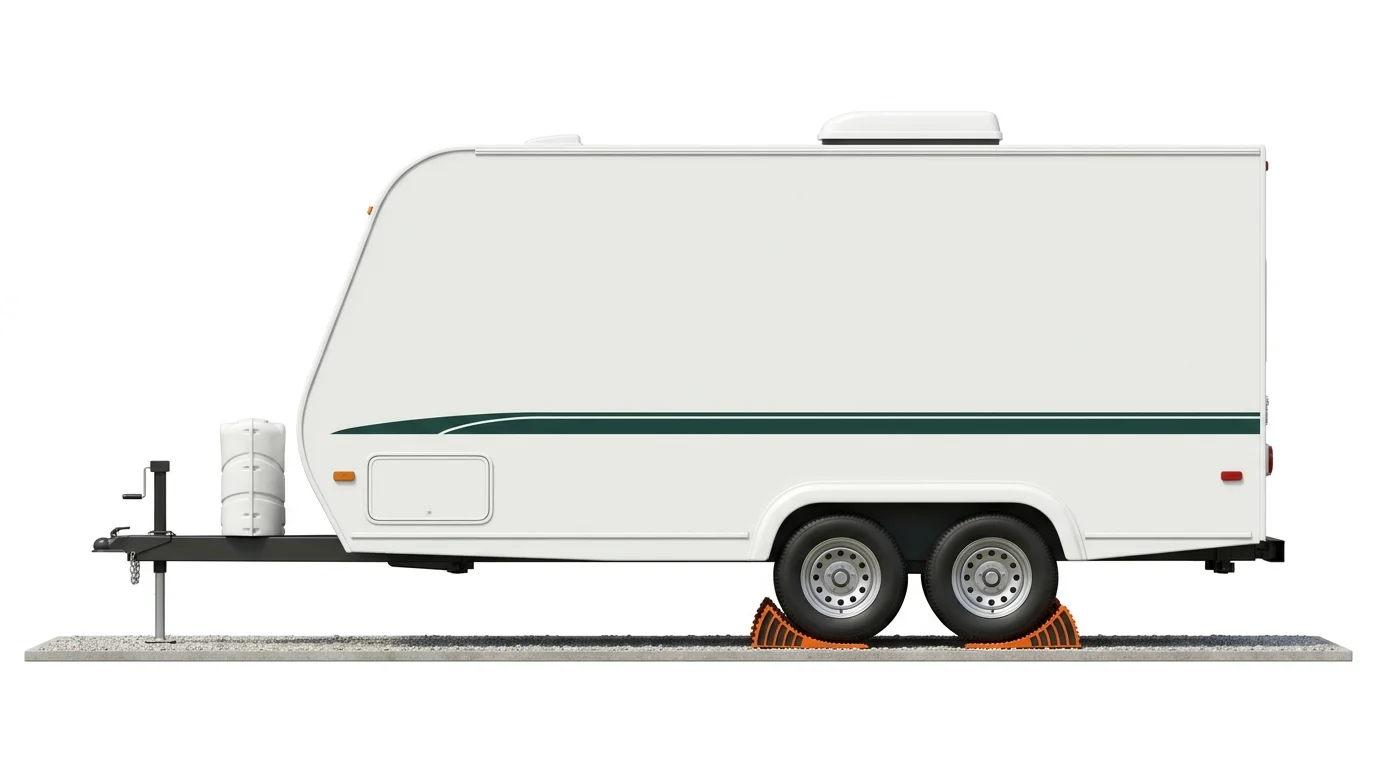
STEP 2: CHOCK TIRES BEFORE UNHITCHING

Jack AFTERUnhitch & level front-to-back second
Illustration: Side view of tandem-axle travel trailer with heavy-duty orange wheel chocks wedged tightly in front of and behind the tires before raising the front tongue jack

Chocks wedged tight front & rear

US Safety Standards & Reference Sources

Always verify exact specs in your coach and tow-vehicle owner's manuals.

Field Guide: Key Specs, Pitfalls & Timing

Boondocking Quick Reference

Key Numbers & Rules of Thumb

  • Water budget: plan 2 to 4 gallons of potable water per person per day for drinking, cooking, and navy showers—gray tank capacity usually fills faster than black.
  • Battery depth of discharge: AGM/lead-acid banks only yield 50% usable amp-hours before sulfation, while LiFePO4 batteries safely deliver 80–90% usable capacity.
  • Solar sizing baseline: expect 400W–600W of solar with an MPPT controller to sustain a 12V compressor fridge, water pump, LED lights, and CPAP/device charging in sun.
  • BLM dispersed rules: pack out 100% of trash, stay within the 14-day stay limit, and verify forest road clearance and washboard turnaround space before committing.

Common Rookie Mistakes to Avoid

  • Leaving the 12V water heater electric element switched on or running residential hair dryers via inverter without checking battery amp-hour draw.
  • Arriving at dispersed BLM land with an empty fresh water tank and full gray tank, assuming a potable spigot will be available past the ranger station.
  • Forgetting offline topographic maps (Gaia GPS / OnX / Avenza) and satellite SOS coverage before cell bars drop miles down dirt forest roads.
  • Skipping leveling blocks and chocks on uneven desert washes—absorption RV refrigerators will overheat and lose cooling efficiency if parked more than 3° off-level.

Pre-Trip Timing & Prep

  • 5 days out: top off twin 20-lb or 30-lb propane tanks, charge house batteries to 100% SOC on shore power, and download offline ranger district MVUM maps.
  • 24 hours out: fill fresh water tank and collapsible jerry cans with filtered potable water, sanitize ice packs, and pre-chill fridge groceries at home.
  • Final mile into camp: scout turnaround clearance on foot before descending tight timber/wash roads, set chocks on rocky grades, and deploy portable solar toward south sky.

Frequently Asked Questions

How much fresh water do I need per person per day for RV boondocking?
Most experienced dry campers budget 2 to 4 gallons per person per day when practicing navy showers and spray-bottle dishwashing. For 2 travelers over 4 nights, a 30-gallon fresh tank plus 10 gallons of backup jugs provides a comfortable safety margin.
Can I dump gray water on the ground when boondocking on BLM land?
Black water: never on the ground—dumping sewage from a holding tank onto US public lands is strictly prohibited. Gray water rules vary by agency and local field office, and most RV dispersed camping requires packing it out to an approved dump station. Check local rules before releasing anything outside your tanks.
How long can you dry camp before needing to recharge 12V batteries?
Standard lead-acid batteries typically run lights, water pump, and a propane furnace fan for 1 to 2 nights before reaching 50% discharge. Adding 200W of portable solar or upgrading to lithium (LiFePO4) extends off-grid autonomy significantly.
What gear helps most if my RV gets stuck in soft desert sand or forest mud?
Always carry a pair of rigid recovery traction boards, a folding shovel, and a 12V high-flow tire inflator so you can air down slightly for traction and dig out safely without waiting hours for a commercial off-road tow.
View all 15 checklists →