RovePlan

Fifth Wheel RV Trip, Pin Weight & 50A Setup Checklist

Reviewed by RovePlan Editorial TeamUpdated 2026-11-198 min guide27 items in default profile (20 essential)

A 27-item pre-departure and campsite setup checklist engineered for US fifth wheel owners—covering kingpin & jaw pull-tests, 50-amp NEMA 14-50P power protection, hydraulic/electric leveling pads, and heavy-duty towing safety.

Disclosure: As an Amazon Associate, RovePlan earns from qualifying purchases. Read full disclosure.

Filter, Customize & Print Checklist

Trip Profile

Fifth Wheel · Full Hookups (W/E/S) · All Seasons · 4-7 nights · 2 travelers

0 / 27 items packed (0%)20 essential remaining

Print blank for a pen-and-paper clipboard list, or check items below first.

0 of 27 checked

Prints cleanly with pen-ready checkboxes (blank or filled).

Add Custom Trip Item (Saved Locally)

20 essential remaining

0/27 packed

Packing & Pre-Trip Field Notes

Kingpin Geometry, Tailgate Clearance & 50-Amp Pedestal Discipline

Hitching a fifth wheel demands methodical consistency every single time you move camp: lower the tailgate before backing under the pin box, visually confirm the hitch jaws wrap completely around the kingpin shaft with a flashlight, insert the safety latch pin, and execute a controlled tug test with the trailer brakes engaged before raising the front landing gear. At 50-amp NEMA 14-50P pedestals, test both hot legs with a 50A EMS surge protector before powering dual roof ACs, residential refrigerators, and inverter chargers.
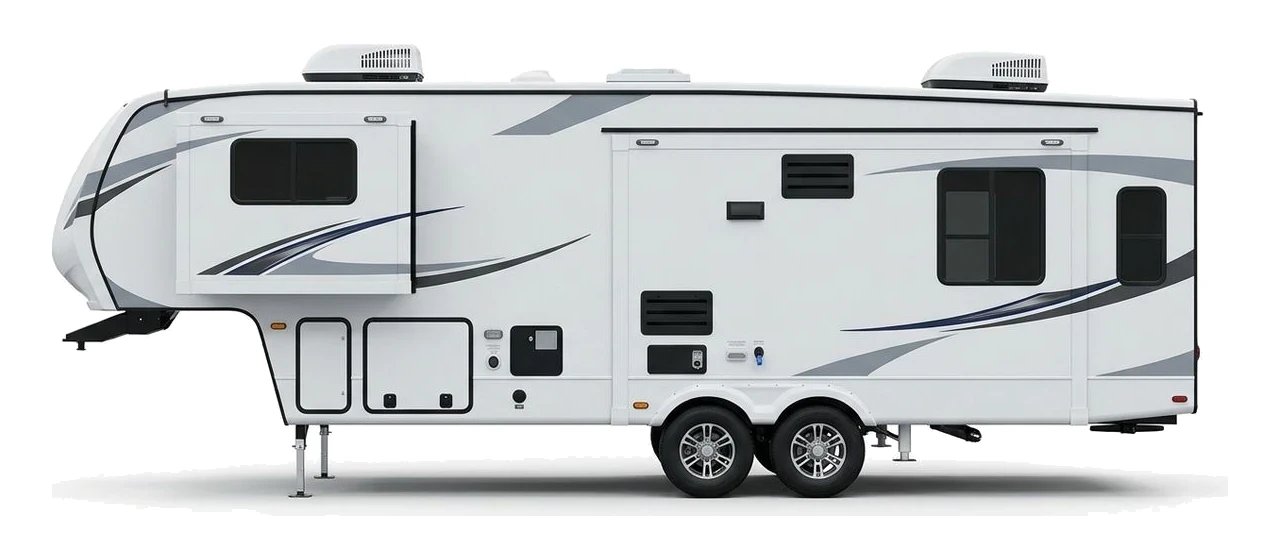
Stabilizing Tall Sidewalls & Dual Holding Tank Systems

Because fifth wheels feature tall sidewalls, expansive multi-slide floorplans, and heavy pin overhangs, placing wide composite pads under every hydraulic or electric leveling jack foot prevents sinking into hot summer asphalt or damp gravel. Installing tandem-axle X-chocks between the tires dramatically cuts fore-aft motion inside the cabin, while carrying a sewer Wye fitting and sloped hose support keeps dual galley/bathroom dump lines flowing cleanly at full-hookup US pads.

Visual Setup & Hookup Sequence Reference

Technical illustrations of standard US campground hookup order and leveling safety geometry (always confirm ratings in your RV owner's manual).

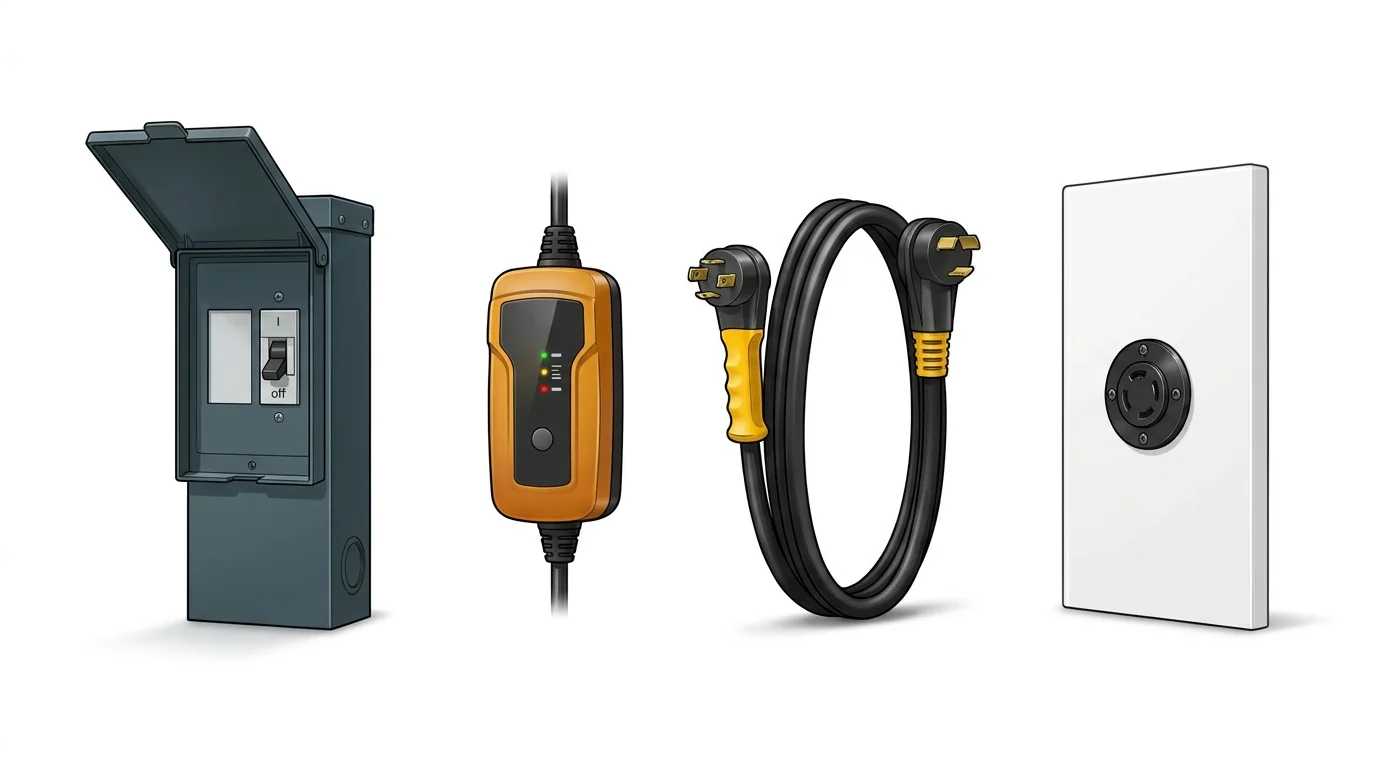
A. Safe Shore Power & Fresh Water Hookup Sequence

Protect coach electronics & PEX plumbing

ELECTRICAL (30A TT-30P / 50A 14-50P) — TURN BREAKER OFF BEFORE PLUGGING

Illustration: Four-step US RV shore power hookup sequence from left to right: campground power pedestal with breaker off, inline EMS surge protector, heavy-duty 30A/50A shore cord, and RV twist-lock shore power inlet
  1. 1. Pedestal

    Breaker OFF first

  2. 2. EMS Surge Guard

    Verify polarity & voltage

  3. 3. RV Shore Cord

    Lock twist-ring inlet

  4. 4. Breaker

    Switch ON

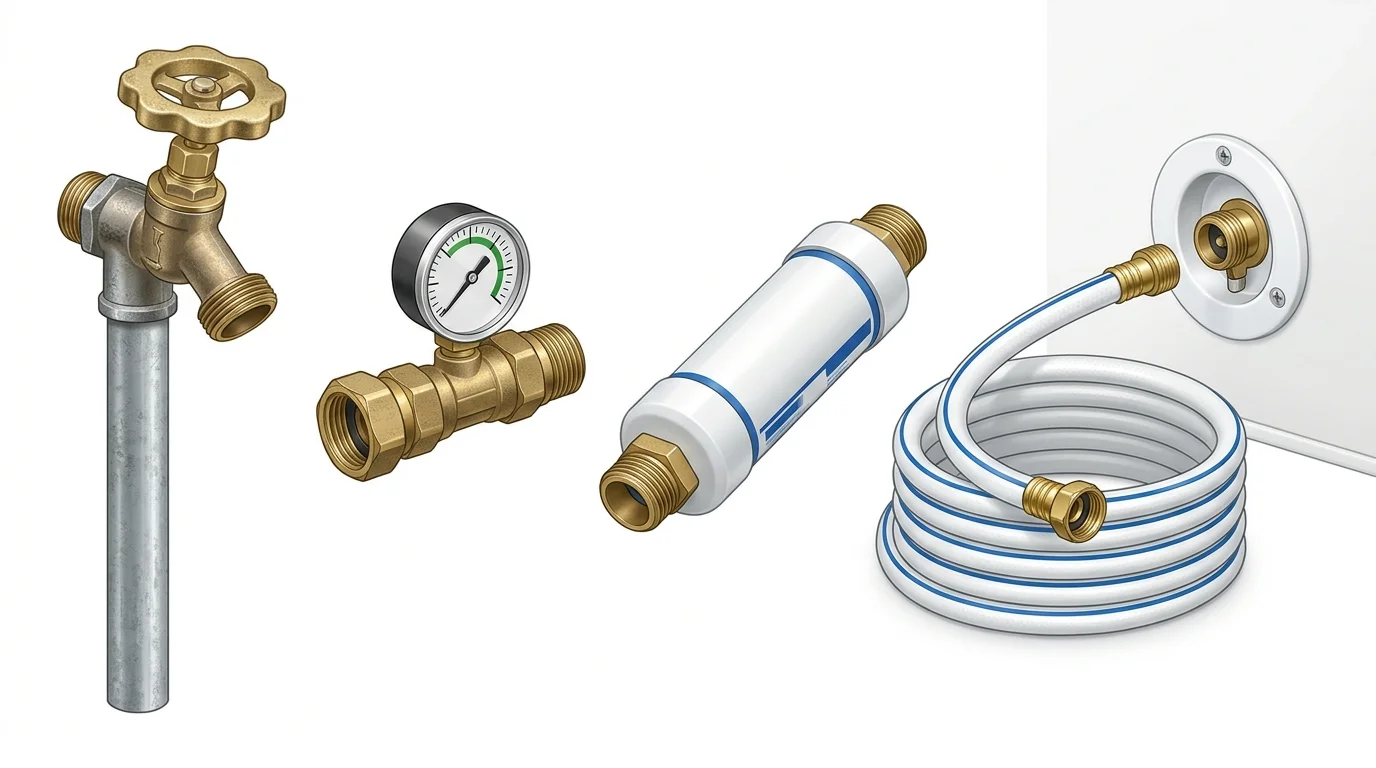
POTABLE WATER (NSF/ANSI 61) — FLUSH SPIGOT BEFORE ATTACHING HOSE

Illustration: Four-step US RV fresh water hookup sequence from left to right: campground water spigot, brass 40 to 50 PSI pressure regulator with gauge, inline potable filter cartridge, and drinking water hose to RV city water inlet
  1. 1. Camp Spigot

    Flush 10 seconds

  2. 2. Pressure Regulator

    Clamp to 40–50 PSI

  3. 3. Inline Filter

    Follow arrow direction

  4. 4. Potable Hose

    To RV City Inlet

B. Campsite Leveling Blocks & Wheel Chocking Geometry

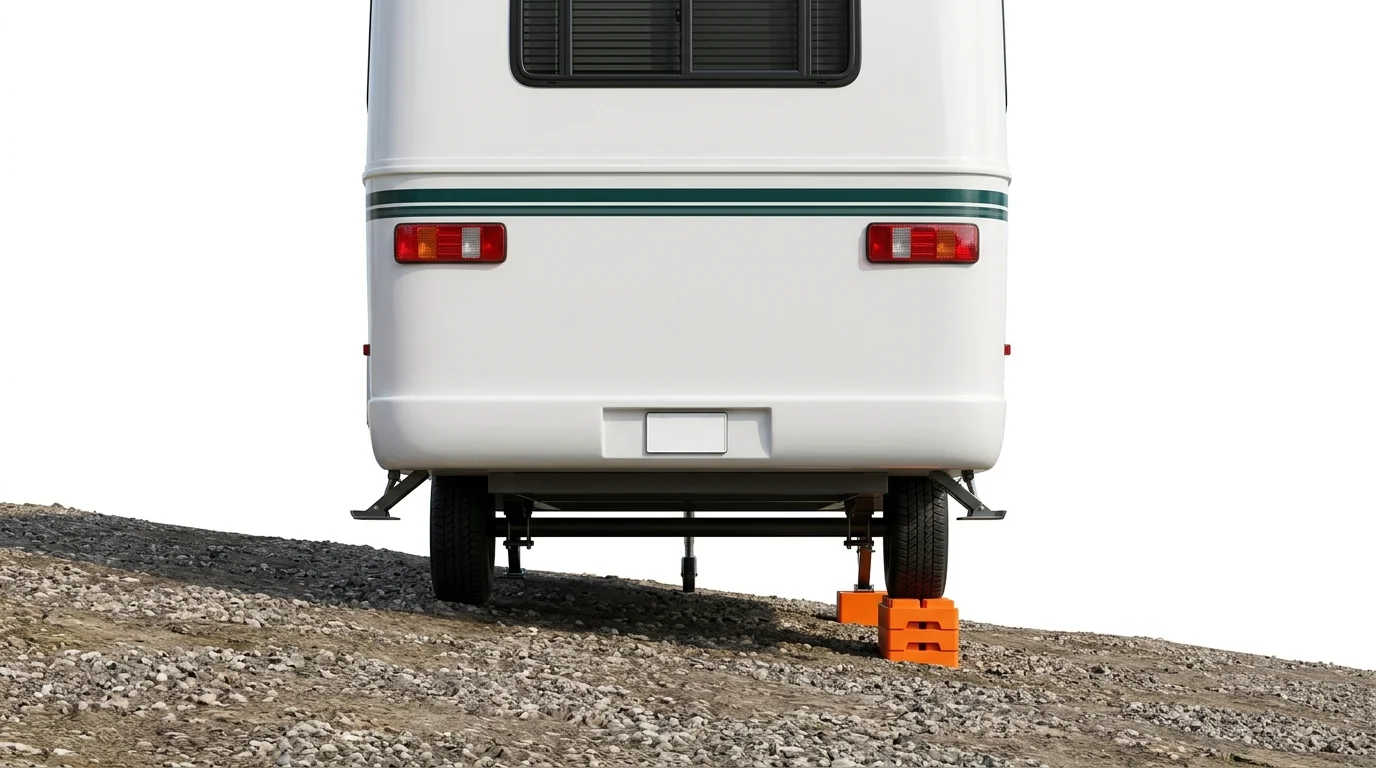
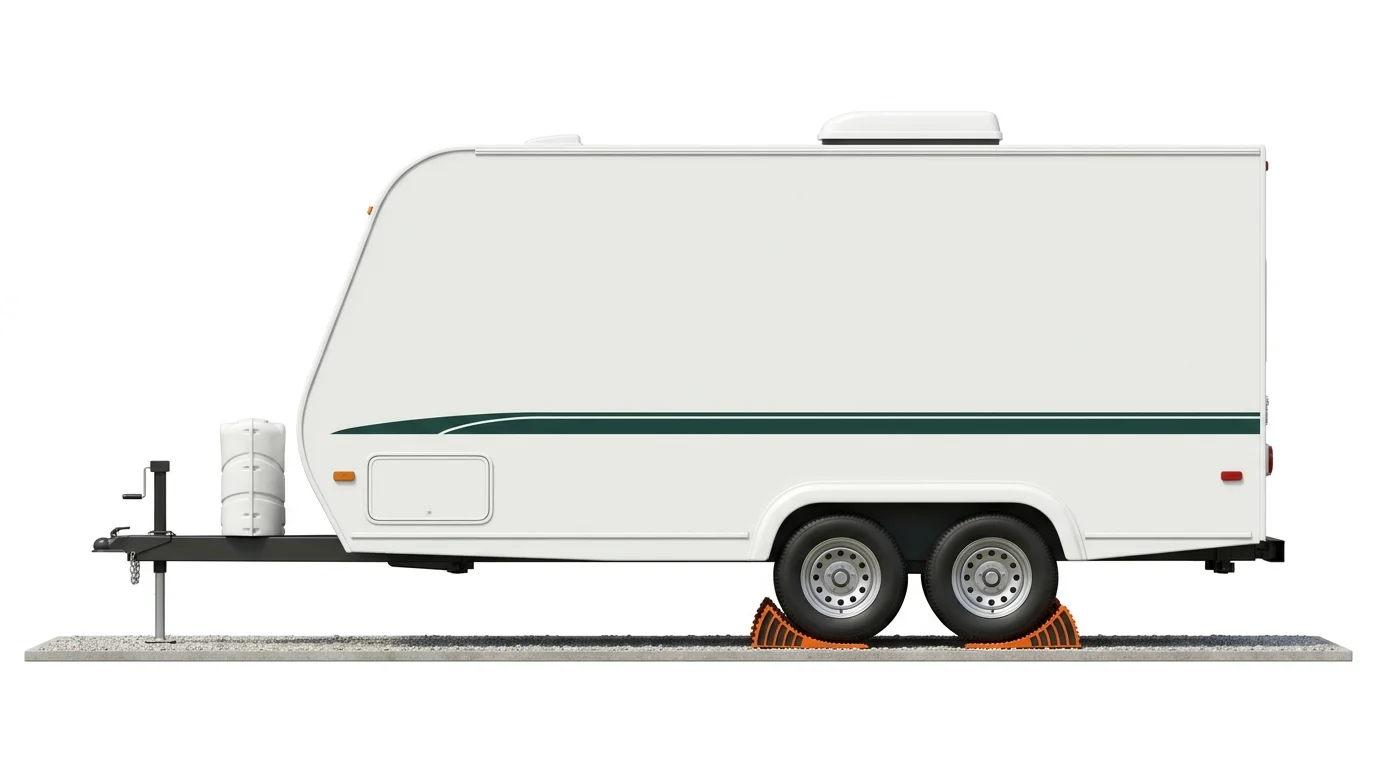
Chock wheels BEFORE unhitching

STEP 1: LEVEL SIDE-TO-SIDE FIRST

Axle Bubble Level
0° Level
Illustration: Rear view of travel trailer resting level on sloped campsite ground with interlocking orange polymer leveling blocks stacked neatly under the low-side tire

Blocks under low-side tire

STEP 2: CHOCK TIRES BEFORE UNHITCHING

Jack AFTERUnhitch & level front-to-back second
Illustration: Side view of tandem-axle travel trailer with heavy-duty orange wheel chocks wedged tightly in front of and behind the tires before raising the front tongue jack

Chocks wedged tight front & rear

Why We Specify These Hardware Ratings

  • EMS vs. Basic Surge Strips: Full Electrical Management System (EMS) units cut power during open neutrals, reverse polarity, or sustained low-voltage brownouts—basic surge strips only absorb brief spikes.
  • 40–50 PSI Lead-Free Brass Regulators: Unregulated US park spigots can exceed 80–100 PSI; capping pressure protects interior PEX crimps and water heater check valves.
  • NSF/ANSI 61 Potable Hoses: Residential green garden hoses are not certified food-grade and can leach plasticizers into coach lines.
  • 15A Household Adapters: Limited strictly to ~1,500W for battery charging and lights—never power roof A/C compressors or electric water heaters through a 15A outlet.

US Safety Standards & Reference Sources

Always verify exact specs in your coach and tow-vehicle owner's manuals.

Field Guide: Key Specs, Pitfalls & Timing

Fifth Wheel Quick Reference

Key Numbers & Rules of Thumb

  • Kingpin weight ratio: fifth wheels transfer 15–25% of gross trailer weight onto the tow truck rear axle—verify truck payload sticker, not just tow rating.
  • Bed-rail clearance: maintain 6 inches minimum vertical clearance between truck bed rails and the trailer overhang to avoid crunching cab/bed corners on steep dips.
  • 50A shore service: a 50A NEMA 14-50 circuit delivers up to 12,000W across two 120V legs (vs. 3,600W max / ~2,900W sustained on 30A), giving headroom for dual roof A/C units and electric water heaters.
  • Bridge & height check: many fifth wheels reach 13 ft 0 in to 13 ft 6 in tall—verify route bridge clearances and overhanging campground oak limbs.

Common Rookie Mistakes to Avoid

  • Hitching without performing a physical tug test AND visually climbing into the truck bed to verify the locking jaws wrap cleanly around the kingpin shank.
  • Forgetting to lower the pickup tailgate before backing under the pin box or raising landing gear before chocking all four trailer wheels.
  • Using a 30A-to-50A dogbone and running both roof air conditioners at once—voltage drop will overheat compressors unless one A/C stays off.
  • Leaving auto-leveling jack pads unpinned or neglecting lube plates, grinding grease onto truck beds.

Pre-Trip Timing & Prep

  • 7 days out: inspect hitch mounting bolts/pucks, torque ST/LT trailer wheel lugs, and check landing gear grease and hydraulic fluid levels.
  • Hitching sequence: back slowly until jaws click, insert safety lock pin, connect 7-way umbilical + breakaway cable, run a gentle pull-test with trailer brakes engaged, then raise landing gear.
  • Arrival check: verify overhead tree branches on pull-through pads before extending tall bedroom/kitchen slide-outs.

Frequently Asked Questions

How much pin weight does a fifth wheel put on a pickup truck?
Fifth wheels typically transfer 18% to 25% of their loaded gross weight onto the truck bed hitch as pin weight. A 14,000-lb fifth wheel can place 2,800 to 3,500 lbs in the truck bed—always verify your tow vehicle's payload sticker inside the driver's door jamb.
Can I run a 50-amp fifth wheel on a 30-amp campground pedestal?
Yes, using a 50A-to-30A dogbone adapter, but your maximum electrical capacity drops from up to 12,000W across two 120V legs to a 3,600W ceiling (~2,900W sustained). You will normally need to run only one roof air conditioner at a time and avoid running high-draw appliances (like a microwave or electric water heater) simultaneously.
Why should I still perform a pull-test after hooking up a fifth wheel?
High-hitching occurs when the kingpin rests on top of closed hitch jaws rather than seated inside them. Checking visually with a flashlight from under the overhang and performing a low-speed tug test with trailer brakes locked prevents catastrophic trailer drops.
What height clearance do fifth wheel RVs need on US highways?
Most full-profile fifth wheels stand between 12 feet 10 inches and 13 feet 6 inches tall at the roof air conditioner shrouds. Always measure your specific rig height and use RV-routing navigation to avoid low parkways, tree canopies, and gas station overhangs.
View all 15 checklists →