RovePlan

Class B Camper Van & Sprinter Packing Checklist

Reviewed by RovePlan Editorial TeamUpdated 2026-11-197 min guide26 items in default profile (17 essential)

A space-conscious 26-item packing and systems checklist built for Sprinter, Ford Transit, and RAM ProMaster Class B camper vans—maximizing payload efficiency, lithium/alternator power management, compact galley cooking, and nimble camp setup.

Disclosure: As an Amazon Associate, RovePlan earns from qualifying purchases. Read full disclosure.

Filter, Customize & Print Checklist

Trip Profile

Camper Van · All Hookup Types · All Seasons · 2-3 nights · 2 travelers

0 / 26 items packed (0%)17 essential remaining

Print blank for a pen-and-paper clipboard list, or check items below first.

0 of 26 checked

Prints cleanly with pen-ready checkboxes (blank or filled).

Add Custom Trip Item (Saved Locally)

17 essential remaining

0/26 packed

Packing & Pre-Trip Field Notes

Payload, Cubic Volume & Power Budgeting in a Class B Van

Class B camper vans trade interior square footage for nimble wheelbase access to tight National Park campgrounds and urban trailheads. Every bulky item competes directly for space under the bed platform or inside overhead soft cabinets, so lightweight collapsible gear, soft packing cubes, and compact 15-foot potable hoses make a dramatic difference. Equally critical is understanding your van's electrical ecosystem: whether you run a 48V alternator-charged system or a 12V lithium bank, verifying battery state of charge, low-temperature charging cutoffs, and shore-power inverter limits before departure avoids surprises off-grid.
Condensation Control & Stealth/Trailhead Etiquette

Inside a compact steel-bodied van, two travelers exhale significant moisture overnight. Pairing magnetic insulated window covers with cracked roof exhaust fans and quick-dry microfiber towels prevents window condensation and protects cabinetry. Before leaving any paved or dirt campsite, confirm every drawer push-latch is seated, roof vent lids are closed, and Lagun-style swivel tables are stowed per your upfitter's transit instructions.

Visual Shore Power & Water Hookup Reference

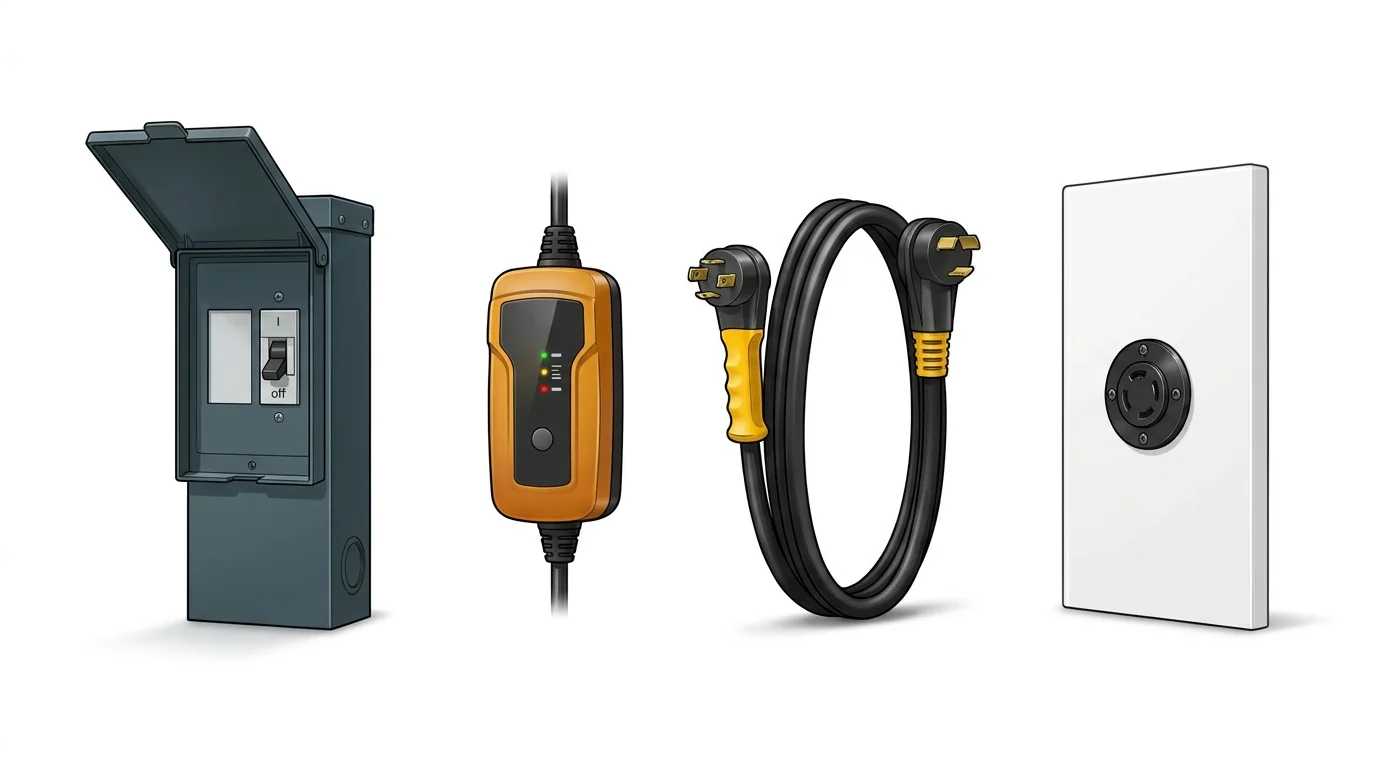
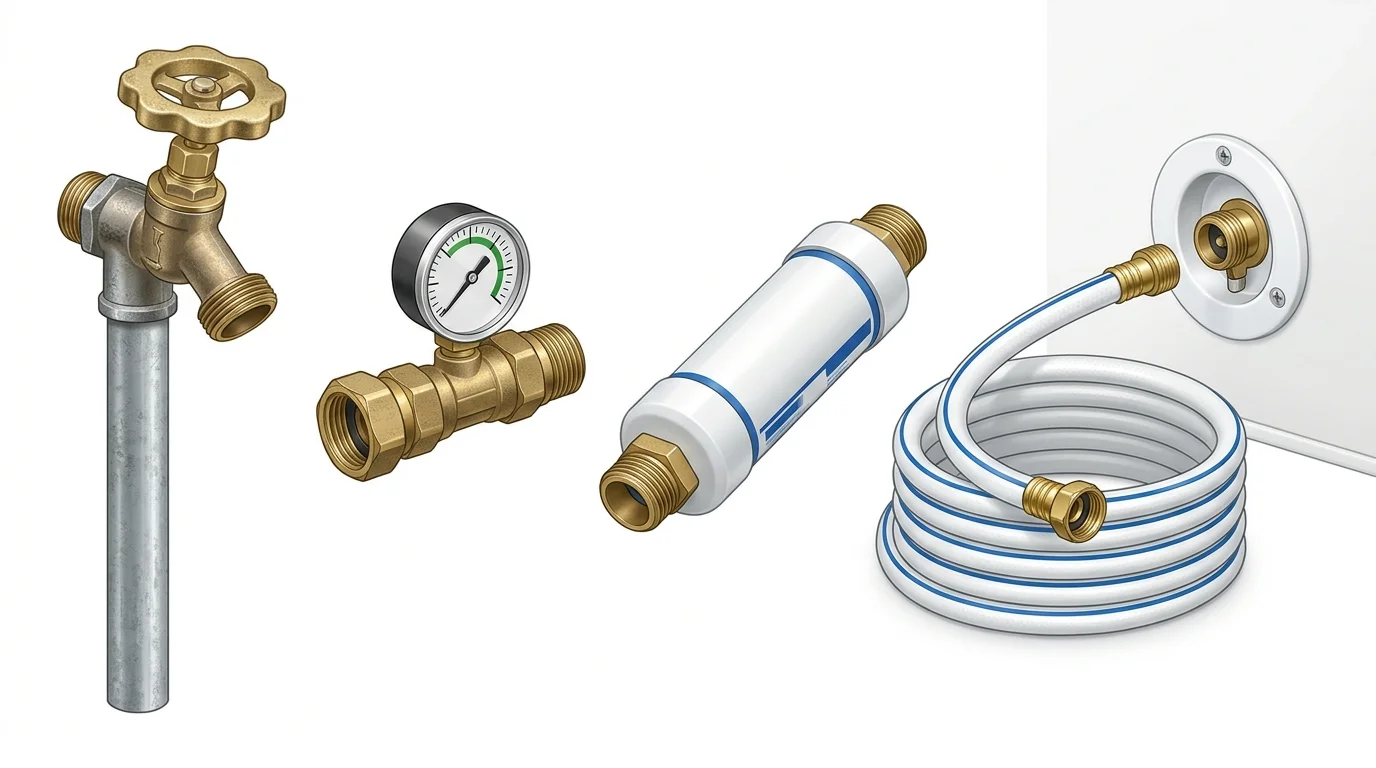
Technical illustrations of standard US campground shore power and potable water hookup sequence (always confirm ratings in your RV owner's manual).

Safe Shore Power & Fresh Water Hookup Sequence

Protect coach electronics & PEX plumbing

ELECTRICAL (30A TT-30P / 50A 14-50P) — TURN BREAKER OFF BEFORE PLUGGING

Illustration: Four-step US RV shore power hookup sequence from left to right: campground power pedestal with breaker off, inline EMS surge protector, heavy-duty 30A/50A shore cord, and RV twist-lock shore power inlet
  1. 1. Pedestal

    Breaker OFF first

  2. 2. EMS Surge Guard

    Verify polarity & voltage

  3. 3. RV Shore Cord

    Lock twist-ring inlet

  4. 4. Breaker

    Switch ON

POTABLE WATER (NSF/ANSI 61) — FLUSH SPIGOT BEFORE ATTACHING HOSE

Illustration: Four-step US RV fresh water hookup sequence from left to right: campground water spigot, brass 40 to 50 PSI pressure regulator with gauge, inline potable filter cartridge, and drinking water hose to RV city water inlet
  1. 1. Camp Spigot

    Flush 10 seconds

  2. 2. Pressure Regulator

    Clamp to 40–50 PSI

  3. 3. Inline Filter

    Follow arrow direction

  4. 4. Potable Hose

    To RV City Inlet

Why We Specify These Hardware Ratings

  • EMS vs. Basic Surge Strips: Full Electrical Management System (EMS) units cut power during open neutrals, reverse polarity, or sustained low-voltage brownouts—basic surge strips only absorb brief spikes.
  • 40–50 PSI Lead-Free Brass Regulators: Unregulated US park spigots can exceed 80–100 PSI; capping pressure protects interior PEX crimps and water heater check valves.
  • NSF/ANSI 61 Potable Hoses: Residential green garden hoses are not certified food-grade and can leach plasticizers into coach lines.
  • 15A Household Adapters: Limited strictly to ~1,500W for battery charging and lights—never power roof A/C compressors or electric water heaters through a 15A outlet.

US Safety Standards & Reference Sources

Always verify exact specs in your coach and tow-vehicle owner's manuals.

Field Guide: Key Specs, Pitfalls & Timing

Class B Van Quick Reference

Key Numbers & Rules of Thumb

  • Wheelbase & length: most Sprinter 144/170, ProMaster, and Transit Class B vans sit between 19.5 and 22.5 ft long—fitting standard urban parking spaces without overhang.
  • Fresh & gray capacity: compact under-chassis tanks typically hold 18–30 gallons fresh and 12–22 gallons gray; carry collapsible water bladders for multi-day BLM stays.
  • Payload margin: upfitted Class B vans carry narrow payload margins (often 900–1,400 lbs); subtract passenger + water weight (8.34 lbs/gal) before packing heavy gear.
  • Charging trio: rely on alternator DC-DC charging while driving, roof solar at camp, and 15A/30A shore pedestals with an EMS surge protector.

Common Rookie Mistakes to Avoid

  • Blocking rear/sliding doors with rigid plastic bins—use soft-sided compression cubes and overhead bungee nets that never rattle on washboard roads.
  • Skipping thermal magnetic window covers: Sprinter/Transit windshields radiate massive heat in desert sun and lose warmth fast in shoulder-season nights.
  • Letting gray tank drains freeze in exposed under-chassis valves on ski or high-altitude trips.
  • Leaving cassette toilet gaskets dry or overfilling past the indicator mark before reaching a dump station.

Pre-Trip Timing & Prep

  • 3 days out: verify LiFePO4 BMS state of charge, DC-DC charger fuse, and diesel/gas heater fuel level (most van heaters cut off below 1/4 tank to preserve driving range).
  • 1 day out: fill fresh tank through an inline carbon filter, stash recovery boards under the bed platform, and pack compact leveling wedges.
  • Pre-drive: verify sliding-door step retraction, swivel seat lock pins, and magnetic spice/galley latches before pulling onto the highway.

Frequently Asked Questions

Do Class B camper vans need an RV-specific surge protector?
Yes. Even though Class B vans are smaller than motorhomes, they rely on expensive lithium battery management systems, inverter-chargers, and DC-DC converters that can be damaged by open neutrals or voltage spikes at older 30A campground pedestals.
What water hose length works best for a Class B camper van?
A lightweight 15-foot or 25-foot NSF/ANSI 61 potable hose is ideal. Unlike trailers that stay hooked up to city water continuously, most van owners fill their 20–30 gallon onboard tank on arrival and disconnect the hose to save storage space.
Why should Class B travelers avoid hard-sided suitcases?
Rigid roller luggage rarely fits inside narrow Sprinter, Transit, or ProMaster overhead cabinets and creates hard edges that shift or rattle in transit. Soft-sided packing cubes and duffel bags compress neatly into van cubbies.
Should I carry a tire inflator rated up to 80 PSI for a camper van?
Yes. Heavy Class B conversions (like Ram ProMaster 3500, Ford Transit 350HD, or Mercedes Sprinter 2500/3500) typically run Load Range E tires inflated between 60 and 80 PSI—beyond the capacity of cheap 35-PSI passenger car inflators.
View all 15 checklists →